Vet's bovine TB fears
A vet from the Shropshire/ Powys border today claimed farmers are going out of cattle breeding because of bovine tuberculosis outbreaks. The Tanat Valley, near Oswestry, has become a hotspot for TB outbreaks.
The Tanat Valley, near Oswestry, has become a hotspot for TB outbreaks, with more than a dozen farms seeing animal movements halted because of the disease.
Rob Edwards, from Cain Vets in Llansanttfraid, said today the disease was taking its toll not only on the agricultural community but on members of the veterinary profession.
"It is affecting farmers. They have had such a lot to deal with recently and for many of the small farms this could be the nail in the coffin that drives them out of beef," he said.
"It is also taking its toll on the veterinary world. We have had to take on two extra vets. Although very important, bovine TB testing is very time consuming and not as interesting as other, clinical work.
"I believe undergraduates are opting for small animal instead of farm animal practices because of testing."
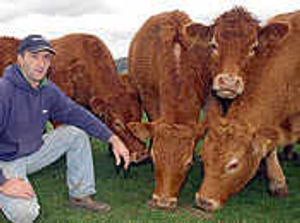
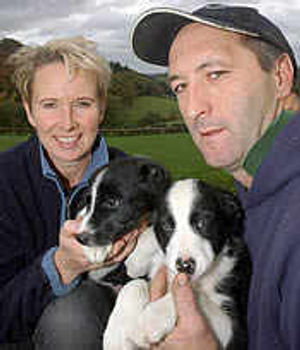
One of the farmers having to cope with a TB outbreak on his farm is Mr Eifion Williams. Mr Williams and his wife Del are now having to rethink their farming enterprise. A dozen cattle on their farm in the Tanat Valley, are being slaughtered.
Cattle movements have also been halted until their herd of 240 Limousin pure-bred cattle is clear of the disease.
It is one of between 12 and 14 farms in a TB hotspot in the valley now having to cope with the problems that the outbreak has brought.
Mr and Mrs Williams say they love their way of life and bringing up their family in the beautiful countryside.
Although they will be compensated for the animals that have to be slaughtered, they now face a cash-flow crisis, because they are unable to sell animals since the TB was discovered a fortnight ago.
"Each test takes up three full days of very hard work, stressful to us and the cattle. They have to be brought in from fields up to a mile-and-a-half away, given a small injection, then each one inspected again 72 hours later to see if they are infected.
"I am now going to rear and feed the 12-month-old animals inside so we won't have to round the cattle up every 60 days. In the long term I have even thought about going out of cattle altogether."
The farming community blames the wildlife for spreading bovine TB but a possible badger cull is proving highly controversial.
Mr Williams said the last thing he would want to see is a mass cull of badgers as they are part of the countryside.
He said: "We know, from testing of a dead badger killed on the road that we have a bovine TB infected badger set about two miles away.
"But the Government has failed to implement a controlled badger cull in hotspot areas."
Vet, Mr Edwards, said three years ago there were no TB cases in the valley.
"Now we are finding a new outbreak every week."