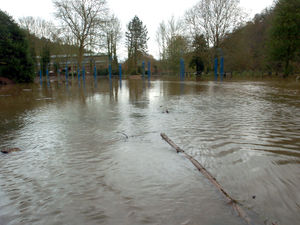
Severn Trent reservoir levels rise for the first time since February after heavy downpours
Water storage levels at Severn Trent's reservoirs have risen for the first time since February.
It's hardly surprising after the extreme downpours, and at times biblical rain, last weekend - but the latest data shows that reservoir storage has climbed above half capacity, increasing by 6.6 percentage points from the previous week's reading.
As of Monday (September 22), reservoirs across Severn Trent’s region were at 52 per cent of maximum capacity - up from 45.4 per cent the week before, which had been the lowest level recorded this year.
The rise follows a prolonged dry summer during which the West Midlands was officially declared in drought. Water storage levels had been falling consistently since early summer, and this is the first weekly increase since February 3.
On September 1, the company’s overall reservoir storage fell below the 50 per cent mark for the first time since online records began in January 2023. It then dropped to 46.3 per cent on September 8 and reached 45.4 per cent on September 15.
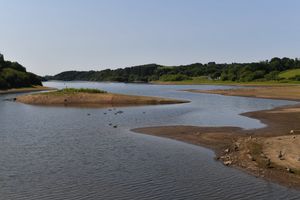
Severn Trent’s reservoirs have a combined capacity of 247,708 million litres, with the latest figures showing they currently hold 128,726 million litres of water.
Despite declining levels over the summer, Severn Trent maintained confidence that it would not need to enforce a hosepipe ban - something not seen in the region for more than 30 years.
At the beginning of September, a Severn Trent spokesperson said: "Throughout the summer we’ve had teams working around the clock, moving water around the network to ensure taps keeps flowing. We haven’t issued a hosepipe ban in 30 years and we’re confident that our great track record will continue this year.
"We’re investing record amounts in new pipes, finding and fixing more leaks than ever and upgrading and developing new treatment works, adding hundreds of millions of litres of drinking water into our network."
A flood alert - meaning flooding is possible - remains in place today (September 23) for the Severn Vyrnwy confluence.
According to the Environment Agency (EA), river levels remain high but are beginning to fall at the Cae Howel river gauge near Oswestry.
The EA has warned that flooding may continue to affect low-lying land and roads between the Welsh border and Shrewsbury.
The alert states: "River levels remain high but are beginning to fall at the Cae Howel river gauge as a result of heavy rainfall. Flooding continues. We expect flooding to affect low-lying land and roads adjacent to the river from the Welsh border at Llawnt to Shrawardine near Shrewsbury.
"Other locations that may be affected include Llanymynech, Maesbrook and Melverley. Llanymynech peaked at 4.48m Sunday morning. Cae Howel peaked at 4.08m Monday night."
Meanwhile, flood warnings for the River Severn in Shropshire, The West Mid Showground and The Quarry in Shrewsbury, and for the River Dee catchment from Whitchurch to Chester were lifted yesterday.
The Met Office forecast for Thursday to Saturday in Shropshire states: "Settled through much of this week with temperatures slowly on the rise. A little cloudier each day, and an increasing chance of showers. Rain arriving in the west later Friday."