'Globally significant' - The mysterious £50m climate project near Newport hailed as one of largest in world
It's not exactly where you'd expect to find it - but one of the world’s largest climate change experiments is taking place in an unlikely location near Newport.
For the past eight years, a research organisation has been pumping carbon dioxide around mature oak trees in Gnosall, Staffordshire, using huge gantries in an attempt to simulate future climate conditions.
Scientists at the Birmingham Institute of Forest Research have been using the data to improve their climate projections and see how the planet's woodlands might look by the year 2050.
The experiment started operations at the site around five miles from Newport in Shropshire in 2017, funded by a £50 million charitable gift and an investment from the University of Birmingham.
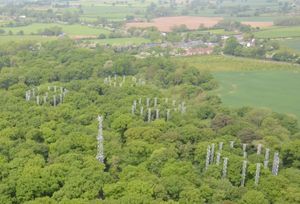
It is one of only three such research facilities to exist worldwide and is supporting researchers globally to understand how forests respond to environmental change.
Data from the experiment is being shared globally to build models for temperate, tropical and subtropical forests - and will ultimately help to decide international climate policy.
The project simulates the effect of a 38% increase in CO2 levels, with researchers at the project saying the Free-Air-Carbon dioxide Enrichment (FACE) programme is providing "invaluable insights" into how a future forest might respond to climate change.
Early results have already shown changes to the leaves of trees in the CO2-rich air, increasing their rates of photosynthesis.
Last year, the project was in jeopardy due to rising carbon dioxide costs, until a Northamptonshire firm agreed to supply the gas to the experiment along with a £150,000 gift to help scientists replace outdated technical systems.
The Telford engineering company drafted in to develop a new control system for managing the experiment, which the firm says relies on a variety of sophisticated instruments to release carbon dioxide into the woodland and collect high resolution data, says the solution they have developed could be used on other environmental schemes.
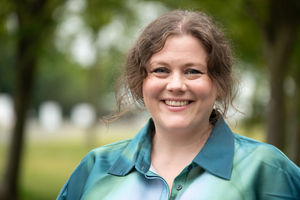
"It's been absolutely fascinating to be involved in such an exciting and globally significant project," said Jennifer Hughes, general manager for Transicon.
"We’ve developed control systems for all sorts of uses across the manufacturing sector but developing a system for use in environmental research and so closely linked to sustainability is a real first for us.
“The solution we have developed provides a blueprint for reliable, consistent experimental control systems which could be implemented globally should the FACE experiments be expanded to other locations in the future.”
Researchers at Birmingham University, who are leading the project, say the experiment is crucial for understanding how mature forests will respond to climate change.
Dr Kris Hart at the Birmingham Institute of Forest Research, said: "The Transicon team has transformed our research capabilities with their innovative approach to modernising our control systems.
“Their expertise has enabled us to significantly enhance the precision and reliability of our carbon dioxide delivery system, which is absolutely vital for the integrity of our long-term climate change research."
The project is expected to run until at least 2031.