TV review: The Century That Wrote Itself
Many people keep a diary but few honestly believe that one day it will become one of the most influential books in history.
That is the case for many famous diary writers whose extraordinary lifestyles would other wise have gone unknown.
Diaries by Samuel Pepys, who recorded among other things the great fire of London and Anne Frank's memoirs on the persecution of Jewish people in the Netherlands each giving a unique incite into some of the largest events in history.
But BBC 4's latest history documentary, The Century that Wrote Itself, has looked at the lesser known writers whose logs of daily life gives the viewer a window into the average daily grind of our ancestors.
The show explains that these often overlooked historical documents provide historians and anthropologists with invaluable information that can't be grasped by digging up artefacts and bring a much more human element to what can be for some people a dull experience.
This weeks episode entitled The Rewritten Universe looks at the stories of an Essex Puritan whose life was filled with heartache and anguish as his family dies one by one, a Norfolk country doctor who we can thank for the creation of hundreds of words such as "compute" and most interestingly the diary of Sir Isaac Newton the inventor of the theory of gravity.
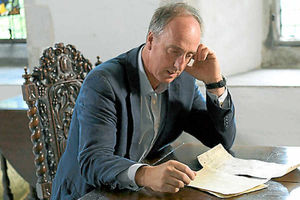
The show's presenter, Adam Nicolson has a real passion for these books which is obvious from the start as he reads his way through the story of the four 17th century writers going into great detail about the people and the time in which books were written.
A time, he explains, when society was redefining its vision of the world, as attitudes toward God began to change, as the true nature of reality and the structure of the universe were beginning to be understood.
And this is where the programme start to struggle as each scene effectively becomes Nicholson reading through the pages of a diary intermixed with talks with experts.
This is something that regular viewers of BBC4 might expect, but there have been other shows that have done it better.
Some of the scenes were just ludicrous seeming almost like an after thought or a poorly thought out metaphor of cliché.
One in particular where the presenter moves to a chess board to illustrate death is a scene reminiscent of so many other shows and it just gets worse as the presenter rides awkwardly down a muddy path for no explainable reason.
This style is typical of many BBC4 documentaries and has become a well established, if a little over done approach.
But as other channels have proved there is a way of balance fact with fun that this show fails to do properly.
History buffs will love this show as it was packed with the kind of level of detail that few programmes go into and in some ways that was the one saving grace of a show that will probably turn many people off with its lack of excitement or variety.
This show could and should have been better executed and is a departure from the usually brilliant programmes produced by the BBC.
Tom Mason