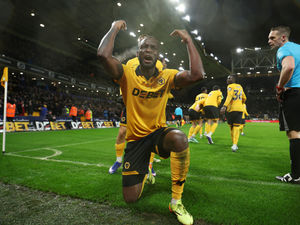
Wolves defender has successful surgery for broken wrist
Wolves defender Matt Doherty has had successful surgery on a broken wrist as he works his way back to full fitness.
The 33-year-old suffered the injury against Bournemouth in August and continued playing in the weeks that followed while wearing a protective splint.
But the Irishman had surgery to correct the issue last week, meaning he missed Sunday's draw with Brighton and also pulled out of the Ireland national team squad.
Doherty is expected to be sidelined for a few weeks, but Wolves are yet to put a firm timeline on his return.
Phil Hayward, the club’s director of high performance, said: “He's desperate to get back, but obviously, we need to respect the fact that he's had surgery.
"In addition to actually repairing the bone, there's also a lot of other associated inflammation around that area from the surgery itself, so we need to wait for that to settle down. There's obviously some healing which needs to be done on the skin surface as well.
“We need to get past this early stage then we can start to really push him again. If he does fall on it and cause himself a complication with the surgery, it’s quite a difficult one to undo afterwards, so we have to be careful and respect the advice from the surgeon.
“He should be absolutely fine. The success rate of these surgeries is very, very high, and he should be back training pretty quickly.
"We can get him going fairly soon with non-contact training and doing things on the grass which don't involve a risk of him falling to maintain his fitness levels while the bone heals.
"Then as soon as he's ready to go back into competition again and take full contact, he should be good to go and back at the level of fitness that he was at when he when he came out of the team.”
Doherty returned to Compton four days after the operation to take part in individual gym work, as he continues his rehabilitation.
The defender had just got himself back in the team and captained the side against Spurs before going under the knife.
Hayward added: “Matt had an injury to his scaphoid, a small bone in the wrist. He fell over when making a tackle and landed heavily on his hand, causing pain in the wrist.
"We had some scans done afterwards and we realised the bone was broken and knew that it would need to be surgically repaired, because the scaphoid is a bone which is known not to repair particularly well without intervention.
“Once the fracture has happened, the damage is essentially already done at that point, so it was a case of finding the right opportunity to do the surgery within a six-week period. We’re towards the back end of that six-week period now from the initial injury, so we decided to go ahead with the surgery at this point.
“A lot of bones in the body will tend to heal themselves without intervention if they are well aligned, but the scaphoid has quite a complex blood supply and once there is a fracture across a certain point of the bone, there's a really high chance that a bony union won’t be established between the two different parts of the fracture.
“In the short-term you’re pretty safe carrying on with a splint to protect it against any movement, or any kind of further insult if you fall again, so we weren't overly concerned about any further damage being caused prior to the operation.”
The procedure was performed by Mike Hayton in Manchester and took one hour, with Hayward also in attendance.
Hayton, one of the country's leading hand surgeons, usually works with athletes in golf and cricket but has also helped Wolves' goalkeepers in the past.
Hayward said: “We’ve used Mike a lot over the last five or six years. It's a pretty straightforward procedure whereby a small screw is passed down the centre of the bone under CT guidance. We got a really good position on the screw, good fixation, and were very pleased with the outcome afterwards.
“We'll tend to take advice from specialists around these more complex problems, especially when we know surgery might be required. We have very open communication with them from the initial injury to talk about the potential treatment options and the timing of such treatment.
“During the surgery itself, one of our staff will be present on the day of the surgery to observe the operation and then talk about the post-operative plan afterwards. There will subsequently be lots of communication between us and them over the next few weeks as we start progressing back towards training and competition again.”