RAC rolls out flat-battery recharge scheme for stranded electric vehicles
System will be able to boost cars stranded at the side of the road
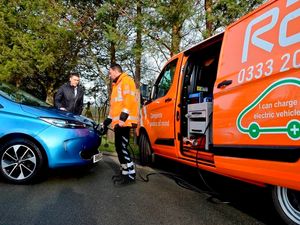
The RAC has announced that it is introducing a new system capable of giving out-of-charge electric vehicles stranded at the roadside a power boost.
The EV boost technology has been created in response to growing demand for battery-powered models, and as a result an increase in the number of such vehicles running out of charge at the side of the road.
Six initial Ford Transit Custom patrol vans fitted with the EV generators will hit the roads of London, Birmingham and Manchester in June, and will take to areas with a high number of call-outs.
RAC head of roadside rescue innovation Chris Millward said: “Our solution enables our patrols to help stranded EV drivers at the roadside with a power boost, equivalent to a top-up from a fuel can for a petrol or diesel car, to get them on their way again.
“With nothing like it on the market the real challenge was to develop a mobile EV-charger system which is compact and light enough to fit into our normal patrol vehicles without compromising on space so we can still carry all the normal parts and tools to help our patrols continue to fix four out of five vehicles at the roadside.
“Other solutions that are available require valuable van space to be taken up by heavy portable chargers that negatively affect fuel economy and also need to be recharged after use. Our on-demand solution means that the power is always available when needed.”
The system will be capable of giving a stranded vehicle enough of a boost to enable it to reach a charger nearby, and is compatible with all Type 1 and Type 2 connectors – making it suitable for 99 per cent of the electric vehicles currently on the UK’s roads.
Millward added: “We also expect it will help address the anxiety some potential EV buyers have about the current charging infrastructure and vehicle range.”