‘Instantly rechargeable’ battery could revolutionise electric vehicle future
Technology allows spent battery fluids to be replaced in similar manner to refilling a car with petrol or diesel
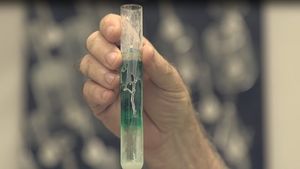
A new ‘instantly rechargeable’ battery could be set to drastically change the future of electric and hybrid vehicles.
Developed by a team of scientists from Purdue University in the United States, the technology would allow motorists to refill their EVs and hybrids with fluid electrolytes that recharge exhausted battery fluids much in the same way you would refill a car with petrol or diesel.
IFBattery was established by the scientists in order to further develop and commercialise the technology.
Eric Nauman, IFBattery co-founder and Purdue professor, said: “Designing and building enough of these recharging stations requires massive infrastructure development, which means the energy distribution and storage system is being rebuilt at tremendous cost to accommodate the need for continual local battery recharge.
“IFBattery is developing an energy storage system that would enable drivers to fill up their electric or hybrid vehicles with fluid electrolytes to re-energise spent battery fluids much like refuelling their gas tanks.”
Existing petrol stations would also be able to be retrofitted to accommodate the new technology, and used battery fluid could be sent to solar farms or other renewable energy sources for recharging.
John Cushman, IFBattery co-founder and Purdue distinguished professor, added: “Instead of refining petroleum, the refiners would reprocess spent electrolytes and instead of dispensing gas, the fuelling stations would dispense a water and ethanol or methanol solution as fluid electrolytes to power vehicles.
“Users would be able to drop off the spent electrolytes at gas stations, which would then be sent in bulk to solar farms, wind turbine installations or hydroelectric plants for reconstitution or re-charging into the viable electrolyte and reused many times.
“It is believed that our technology could be nearly ‘drop-in’ ready for most of the underground piping system, rail and truck delivery system, gas stations and refineries.”
The company is now at the stage where it is seeking additional financing to build large-scale prototypes as well as seeking manufacturing partners.
Companies are racing to solve the recharging problem posed by electric vehicles. Last month, Qualcomm Technologies successfully tested a specialist ‘Fabric’ road surface that can charge vehicles wirelessly while they were on the move.
The test was carried out over a 100-metre stretch of the road surface, which uses 25-metre charging blocks that are placed together. Each block houses a power pack that generates a wireless signal, which is then transmitted to a pad on the bottom of the car, charging its batteries.