Temporary consent for static caravans near Ellesmere is refused
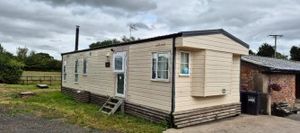
Shropshire Council has refused an application to continue temporary living arrangements at four static caravans near Ellesmere.
Doo Rickett submitted an application for three-year temporary consent at the site in Dudleston Heath, near Ellesmere. The owner occupies two static caravans, with the other two to be occupied temporarily by the future occupants of adjacent barns following conversion.
“Allowing the occupants to remain on site during the application and conversion stages of the barns permits the occupiers to be resident on the land they will have the use of anyway, lessens disruption from an equestrian perspective and will also provide security for the horses and during the build works,” said Carl Huntley, of Base Architecture & Design.
He added that access is off the B5068 with no restrictions regarding visibility splays, there would be no impact on biodiversity, the caravans are already connected to the existing foul drainage system on site, and there is no risk of flooding.
“Three of the four static caravans on site have been in place for several years,” said Mr Huntley.
“We are looking for a temporary planning consent for three further years to allow the residents to remain on site whilst the application for the conversion of the existing three barns is progressed.
“This allows the current residents to remain on the site in the interim period and then move into their permanent residence once the barn conversion scheme is completed.”
However, objector Jill Roberts raised concerns around the foul drainage system.
“This is a historic system that is overloaded due to being utilised by the four caravans,” she said.
“The old reception pit/tank is located next to our property boundary and overflows raw sewage regularly after heavy rainfall.”
Ellesmere Rural Parish Council also requested that a full drainage inspection is carried out before any ongoing permission is granted.
“Neighbouring properties should not be impacted by an inadequate system, nor should ongoing permission be granted in the absence of an adequate system,” said a spokesperson.
“The parish council would also like confirmation as to how many years ongoing ‘temporary’ occupation can be granted for. Is council tax being charged to these properties?”
Mark Perry, a planning officer at Shropshire Council, refused the application ciitng its failure to demonstrate that an acceptable foul and surface water drainage strategy is achieveable on the site.
“In the absence of sufficient details, the Local Planning Authority cannot be satisfied that the scheme would not result in increased flood risk or pollution,” said Mr Perry.
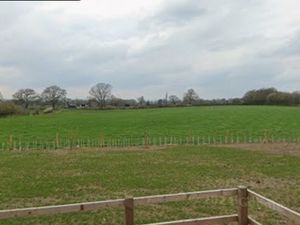
He added that the site is situated within open countryside, where planning policy restricts open-market residential development.
“The proposal does not satisfy any of the exceptions outlined by current policy, nor has a sufficient need or benefit been demonstrated,” said Mr Perry.