Council to decide who will carry out vital restoration works at Grade I-listed 'at-risk' Oswestry building
Councillors are being asked to consider appointing a heritage conservation building team to carry out work on a prominent Oswestry building which has fallen into disrepair.
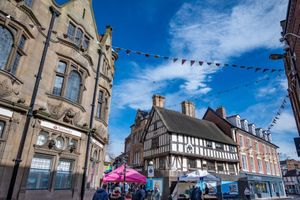
Llwyd Mansion is one of the town’s most historic buildings, with the Grade I-listed house dating back to 1464/5.
A striking plaster roundel featuring a two-headed eagle represents the coat of arms of the Lloyd family of Llanforda. The date ‘1604’ was added later during a Victorian restoration in the 1870s.
In November 2023, Oswestry Town Council purchased the building, bringing it into public ownership for the first time.
However, years of structural changes, poor repairs and lack of maintenance have left the building in a fragile state. It is currently listed on Historic England’s Heritage at Risk register.
In May the town council secured £479,972 from The National Heritage Lottery Fund, along with funding from Historic England’s Heritage at Risk fund, to begin the development phase of the restoration project.
It is being headed by Buttress Architects, a leading provider of architecture and heritage consultancy.
Ahead of an Oswestry Town Council meeting on Wednesday (October 8), councillors have been sent a report from project manager Samantha Jones and town clerk Arren Roberts regarding the tending process that has taken place so that enabling works can start on the building.
The heritage conservation building team would work alongside Buttress and Ms Jones to carry out a series of enabling works, repairs and surveys to inform the project of measures required within the delivery stage.
This would include “sensitively” removing later hairdressing equipment still in situ and plasterboard partitions.
Opening up failing panels to test the construction and replacing them with a temporary board will also take place, as well as ascertaining whether the 1880s shopfront is still underneath.
The report says that a scoring matrix was used to assess each applicant, taking into consideration their price, experience of working on listed buildings (preferably Grade I), relevant knowledge, skills and experience of key members of the team, methodology for managing subcontrators, and project timescale.
The council’s budget for the enabling works and surveys is £54,918. Only one of the contractor’s prices was lower at £50,586, with one of the applicants quoting as much as £130,884.
'Contractor A' ranked highest in the scoring, with the council saying they demonstrated good value for money, and could source cheaper equivalent specialists where benefits could be be found.
They also demonstrated good experience, including in timber-framed buildings, have knowledge of the mansion, and have put together an experienced team. The council added they are also local so their carbon footprint will be reduced.