New beaver observation building at Mid Wales nature reserve approved
Visitors to a Mid Wales nature reserve may soon be able to view beavers from a purpose-built observation building after plans were give the go-ahead by county planners.
In February, Emyr Evans of Montgomeryshire Wildlife Trust lodged a planning application with Powys County Council to build a beaver observation building at Cors Dyfi Nature Reserve at Derwenlas near Machynlleth.
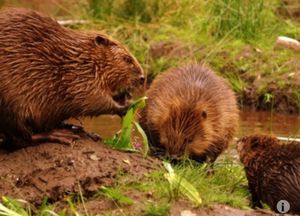
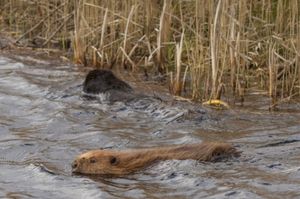
The nature reserve has a seven-acre enclosure which is home to a small family of beavers.
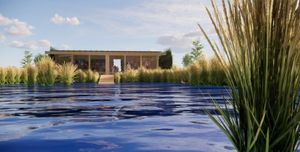
The proposal is for the installation of an observation building and a boardwalk access that will connect it to an existing pathway.
A feeding station will also form part of the building which is essentially a small flat decking area adjacent to the windows facing the bog/watercourse.

A ramp will be installed from the bog/watercourse to allow the beavers to come up to the feeding station.
The building itself will consist of a single room and some seating and will also be elevated from ground level.
Solar panels will be placed on the roof.
The Welsh Wildlife Trust has established a Beaver Management Network as part of project that could eventually see beavers reintroduced into the wild in Wales.
This project is based on the beaver management strategies that have been developed in Scotland and Devon.
The trust said: “The enclosure has a perimeter of around 700 metres.
“The area contains three interlinked pools, a network of ditches and a mass of birch and willow scrub.
“There is plenty of food for the beaver family and lots of space for them to explore.
“The enclosure will be monitored regularly in accordance with our licence from Natural Resources Wales.”
Planning officer Aled Willams said: “The application development site is situated within a flood zone.
“It is not considered that the proposed works would cause any flooding implications, and it is not vulnerable development.
“The development is therefore considered acceptable in this location.”
Mr Williams approved the scheme.
Beavers were once widespread across Wales, but due to over-hunting for their fur, meat and scent glands they became extinct in Wales just after the Middle Ages. By the end of the 16th century, they were extinct from the rest of Britain.
Beavers are known as a ‘keystone species’ because their activities can benefit a wide range of other animals and plants that live in rivers and wetlands. They play a vital role in enriching biodiversity by restoring and managing river and wetland ecosystems.