Nothing beats the satisfaction of farming
By Richard Bower
Ahead of Mother's Day In March I spent the eight nights working for the same flower company in Lincolnshire that I helped at Christmas. Mother's Day peak is their busiest period of the year, followed by Christmas and then Valentine's. The Packhouse operates 24 hours per day and internet sales had another record year, highlighting the growing consumer trend. I am sure there are opportunities for farmers to use the internet to cut out the middleman and sell their produce direct.
During the nightshift I was only one of three British people on site, the rest being a mix of European nationalities. One break I read the local paper which said unemployment in the area was at a low of 650 people. The Packhouse I was in employed 1000 workers so if it provided jobs for all of the unemployed in the area they would still need 350 migrant workers to get the job done. This is only one of many fresh produce businesses in the area. I suppose I am a migrant travelling from Staffordshire to work in Lincolnshire.
Although I miss the farm and its challenges when I am away I like engaging with different people and earn more in a week than a month farming. Being in a Packhouse for 13 hour shifts is intense - on the farm days can be longer but I am never counting down the hours and the job satisfaction is much higher for me.
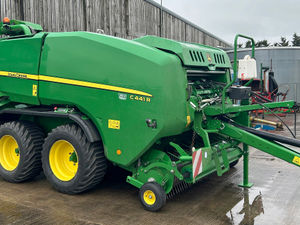
Luckily the week I was away, it was wet and windy at home, we had hired a muck spreader the week before to clean out the cattle sheds on to the maize maize field and we have top spread some FYM on some hungry first wheat ground after strawberries. We also let last year's heifer calves out to grass on March 15 with access to supplementary ad lib creep feed.
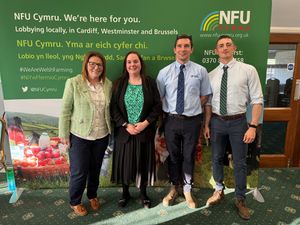
It has been a busy month with NFU again. I sat on a panel with Owen Paterson MP at the Shropshire Environmental Leaders Conference at Harper Adams, looking at how different stakeholders along the Supply Chain can work together to benefit the environment, it is important farmers are involved in these discussions, it was also good to be back at Harper after graduating from there six years ago.
The following day I drove to Newquay, Cornwall to be on a panel with George Eustice MP at the South West Area Young Farmers weekend. I feel very fortunate to be asked to be involved with these positive meetings, it would be good to get George Eustice to the West Midlands.
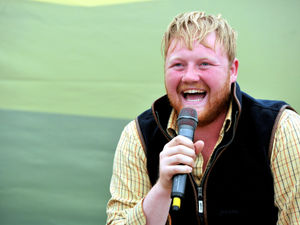
In March I was also asked to speak after the Staffordshire Ladies Committee annual dinner, again I feel very fortunate to be asked to do this, I was probably more nervous because i knew the audience personally. By asking me to speak they are recognising the Next Generation needs to be given an opportunity. The previous week Bill Madders had been the guest speaker at Blymhill Agriculture Discussion group. Bill highlighted how he was involved when the milk marketing board was split up 20 years ago. In hindsight it should have been split using vertical integration so the producers, processors and retailers remained linked. However, it was split horizontally so there was no integration along the supply chain. Hindsight is a wonderful thing, Bill mentioned that at the time stakeholders were too busy arguing between themselves rather than looking at the bigger picture for long term opportunities. Bill likened this to Brexit; rather than discussing who voted in or out, the decision has been made and we need to look for the long term opportunities for our industry. Another interesting point that Bill made was, he thinks in the next 50 years we will see greater changes in our industry than what he has seen over the last 50 years. This is a massive statement which I agree with.
I met George Eustice MP again as I represented NFU Next Gen at an Innovative Young Farmers workshop at DEFRA in London, with a selection of farmers from various different backgrounds. We started by breaking into groups to identify the key challenges we faced getting into agriculture and then focused on the role of government and the role of industry for new entrants of the future. It is very good that DEFRA are holding these stakeholder consultations to gain the views of actual farmers. My thoughts are, mechanisms such as grants, favourable tenancies, futures markets and tax relief do exist in some forms but these need to be supported and promoted more going forward.
After the meeting we had a tour of the House of Commons organised by James Evans from Wales Young Farmers, James spent a year working in London for the Conservative party and he organised for us to meet a group of MPs from the EFRA select committee to discuss opportunities for the Next Generation of farmers.
This was the same day that the Brexit Bill was agreed by Parliament, I feel very fortunate to have witnessed the votes taking place.