Shropshire farmers plough a different furrow
Shropshire farmers are being forced to diversify in the battle to make ends meet, with many having already turned to rural tourism to get by.
Low crop prices, the ongoing fight against tuberculosis, and drastic changes in weather, means farmers are struggling like never before.
But rather then give up on what has been a way of life across the countryside for centuries, they are now embracing a new approach to balance the books.
From cow sheds turned into busy cafes and barns converted to bed and breakfast units – the face of farming in the 21st century is drastically changing.
And David Clarke, of Churncote farm in Bicton Heath, Shrewsbury, has no regrets, having transformed his farm into a tourist hotspot.
Mr Clarke says: "There is 420 acres of land here.
"In 2013 we opened the farm kitchen and the majority of what we serve is our own produce from the farm.
"The restaurant was a natural way forward because we have had a farm shop for 11 years, but the shop happened originally because we were struggling financially.
"Me and my wife, Sue, sat down and it was a choice between me taking a second job and trying to open a farm shop.
"We have no regrets because we were in a prime location but you really have to work at diversification to make it a success.
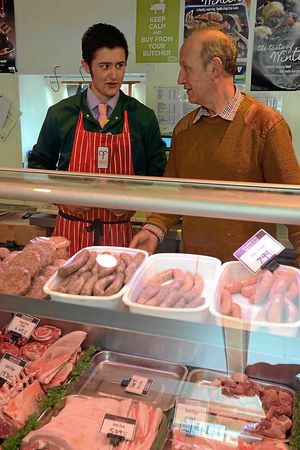
"Farming is an isolated way of life and we have had to learn how to communicate with our customers.
Mr Clarke now employs 10 people working across his farm shop and restaurant, and believes the farming community have had no choice other then to embrace new ideas.
He says: "In some ways farming hasn't changed.
"You still get up at 5am but we've really struggled with margins.
"So you go to the pub and you talk about how much milk your dairy cows are producing and then you talk about how you're getting second jobs to get by.
"So whether that be hedge laying or contracting, there is so much uncertainty at the moment."
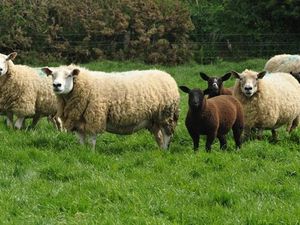
Mr Clarke farms sheep, beef cattle, pigs, and free range hens.
As well as serving Shropshire style breakfasts, he also lets people get to know the livestock.
More than 100 of his ewes gave birth in January, and there are only three weeks to go until his next flock of 220 ewes go into lamb.
He says: "Children are my best customers, lots of kids don't know where food comes from and they they come here and they'll ask their mothers to buy our sausages.
"We were left with no choice but to diversify, there are lots of things effecting farmers at the moment from the wheat prices to bovine TB.
"We are still an incredibly close community but sometimes you can't keep thinking that it will all be OK.
"We had to do something and we have absolutely no regrets, despite the challenges we have faced."
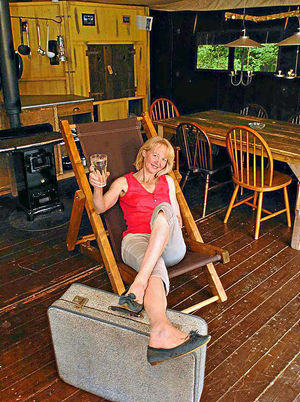
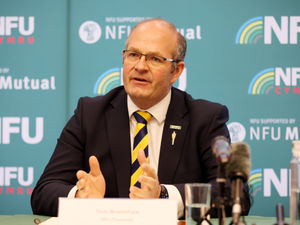
Former NFU press officer Joy Fox, of Upper Shadymoor Farm, at Dorrington, near Shrewsbury, echoes these sentiments.
She took things a step further by turning a farm previously hit by foot and mouth disease into a rural retreat.
With 200 acres of land Joy and Kevan Fox provide accommodation with a difference, with 16 wild swimming pools and glamping tents.
Mrs Fox says: "We brought the farm before it was hit by foot and mouth in 2001, but we just couldn't afford to stock it.
"We both come from farming backgrounds so we had done all that, and it was a conscious decision to go in a different direction.
All around the county, farmers are making their land available for others to enjoy, and the Evans family who live in Rowton have a high turnover of guests.
They converted a barn into B&B accommodation 10 years ago, and cater for wedding guests at nearby Rowton Castle.
But they have also farmed for generations, and are combining people with produce to make a profit.
Lorraine Evans says: "We decided to give up our dairy herd around the time of the foot and mouth outbreak.
"We didn't actually have foot and mouth but it was a difficult time and our herd was small anyway. It was a struggle and we had to do something with the old farm building because it was of no use to modern day farming.
"Now I employ six people and we haven't looked back."