Call to keep the faith
Caroline Bedell, regional director of the Country Land and Business Association, explains why the public must keep their faith with Britain's farmers.
 As if the haunting spectre of foot-and-mouth disease was not difficult enough, the news that bluetongue has now arrived on these shores is testing the resolve of even the hardiest rural campaigners, writes Caroline Bedell, regional director of the Country Land and Business Association.
The continuing menace of foot-and-mouth in the South East, combined with the official outbreak of bluetongue, a disease previously unheard of in the UK, is a double whammy that has understandably sent shockwaves throughout the farming and rural businesses community.
There is no risk to human health from this disease and we must not let this knock public confidence at a time when consumers are being asked to show solidarity with British farmers by eating British meat.
The arrival of bluetongue has been on the cards for some time as a result of its rapid movement across Europe, and the milder weather we have been experiencing in Britain. Now it is here we must stay calm and work together as an industry to ensure that the devastating effects of foot-and-mouth we have witnessed are not exacerbated by this new crisis.
We are calling on the government to bolster confidence in farming by coming to its defence in much the same way as it did with the banking industry. This will be achieved not only through support packages, but by obvious concern for what's happening in the countryside with visits from the Secretary of State, ministers and Defra officials so they can see the effects for themselves.
CLA president David Fursdon spoke to Jeff Rooker, the farming minister, at the Labour Party conference to stress the point that the effects of foot-and-mouth have been felt across the whole country. Farmers and rural businesses have been left with frightening financial burdens at this crucial time of year.
These could be alleviated through deferring tax payments, encouraging the banks to be supportive and making early payments of single farm payments and the hill-farm allowance.
A lack of information creates speculation and gossip - unhelpful in a situation like this - and we have stressed the need for a steady stream of information to reassure those affected that issues are being considered or worked on to avoid this. We understand that there is a fine line between too much and too little information, but it's one the government must find to maintain confidence within the industry.
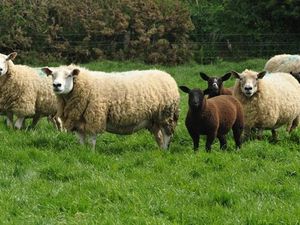
A meltdown in the lamb market is also a real possibility unless urgent measures are taken to address the consequences of market closures. Millions of pounds will be lost and the livelihoods of the thousands of sheep farmers, who look after some of our most precious landscapes, are at stake.
For this reason David Fursdon has called on Jeff Rooker to seek urgent approval from the European Commission to provide cold-storage aids to take British lamb off the market and avoid a collapse in lamb prices.
We are already seeing serious problems right across the sheep industry. Last week in the Carlisle market, lamb was trading as low as 68p/kg, down from 125p/kg before August.
It is also vital that Defra considers properly the relaxation of movement controls on a regional basis. Defra has reassured the CLA that it is actively looking at a regional scheme that would allow limited movement of livestock in certain areas of the country; it recognises the welfare issues.
Tracings from the last foot-and-mouth outbreak need to be confirmed and although we haven't been given a timescale, we will push for more news on this.