National Curriculum Review 2025: Five big changes coming to what your child learns about at school
Learning to budget, fight back against online misinformation, and speak more clearly are all skills that children will soon start learning as early as primary school.
Last year, the Government launched a full, sweeping review of England’s national curriculum, which sets out what young people are taught in school and how this knowledge is assessed, from Reception all the way up to the sixth form. The review panel’s final report has now been released, with the Department for Education (DfE) signalling its intent to adopt many of the recommendations.
Among the changes on the table will be the scrapping of the English Baccalaureate (EBacc) to encourage learners to study a greater breadth of GCSEs including the arts, as well as teaching more key life skills whilst pupils are still in primary school, and an overhaul of tech and computing papers to make sure they’re fit for the future.
It has been over a decade since the curriculum was last updated, education secretary Bridget Phillipson said, so “it’s more crucial than ever that young people are equipped to face the challenges of today”. She continued: “From the fundamentals of reading to the present danger of spotting fake news, as part of our Plan for Change, these landmark reforms will help young people step boldly into the future, with the knowledge to achieve and the skills to thrive as the world around us continues to rapidly evolve.”
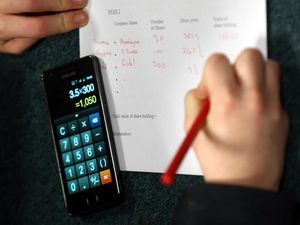
The changes won’t come about right away, however, with the Government saying the new curriculum won’t be published until spring 2027, coming into effect from September 2028 to give schools time to prepare. Here are some of the key changes to what pupils will start learning in school from then onwards, which parents need to know about:
1. Fresh focus on financial literacy
The Government says it will make citizenship studies compulsory in primary school. Life skills such as financial literacy will be a big part of that. Pupils will learn more about the fundamentals of money, “recognising that children are now consumers often before they reach secondary school”.
In the report, the review panel wrote that “financial education should not be delayed until later life”. It continued: “Research shows that children’s habits and attitudes towards money develop at an early age, including their disposition to spend or save, and this underpins their financial capability in adulthood.”
A robust financial education would include teaching pupils about core concepts like budgeting, debt, interest, mortgages, and pensions, alongside learning about how mathematical concepts can be applied to real-world scenarios involving money, it said.
2. Doubling down on science and tech
Schools will be expected to work towards offering triple science GCSE as standard, the Department for Education (DfE) says, meaning pupils get the opportunity to study biology, chemistry, and physics during their time at secondary school.
Not only that, but the Government says it plans to replace the current “narrowly focused” computer science GCSE with a new “broader, future-facing” computing one, whilst also exploring a brand new qualification in data science and AI for 16 to 18-year-olds. It described the move as “helping more young people succeed in the science and tech careers that power our economy”.
3. Media literacy and misinformation
Also falling under the citizenship banner for primary school pupils will be media literacy studies, the Government says, alongside a few other important topics like law and rights, democracy and government, and climate education.
“For the first time, primary aged children will gain vital skills like how to spot fake news and identify misinformation and disinformation, helping them develop the critical thinking needed to challenge what they see and protect them from online harms,” the DfE added.
The report said that misinformation and disinformation could take many forms, from the scientific (like anti-vaccine campaigns or climate change denial), to the political (like deepfake content of political figures or misrepresentation of current or historical events), to more general unverified claims online.
“Research has shown this is a growing concern for young people, as well as for teachers and parents and carers. Over half of young people reported that they have encountered someone in their class (51%) or on social media (52%) who believes in a conspiracy theory and almost half of teachers (49%) reported they are at least moderately worried about a pupil expressing a belief in a conspiracy to them in the classroom,” it said.
Learners needed to learn how to investigate sources, weigh up evidence, and apply an informed critical lens, the review added. “This is essential in a world where misinformation is prevalent, and facts are increasingly disputed.”
4. Stronger speaking skills – alongside reading & writing
Oracy, or speaking skills, will also become a bigger part of the curriculum. The DfE says that it will publish a whole new framework, “to ensure more young people become confident and effective speakers”.
This will cover both the primary and secondary school years, and will be combined with reading and writing for older pupils, “so these are embedded across the whole curriculum”. Teachers will also be supported to strengthen their oracy teaching with practical tips, tried-and-tested strategies, and examples of best practice.
Other literacy skills, especially reading, will also be a big area of focus for the Government moving forwards, with the DfE saying that at the moment, around 1 in 4 children leave primary school without being able to properly read, “and too many are leaving school without passing their GCSE English”.
It will introduce a new statutory reading test in Year 8 and a strengthening of writing assessment in Year 6, “to spot pupils who need extra support at a crucial point in their development”.
5. Better access to extracurriculars
Evidence showed that children taking part in more extracurricular activities was associated with higher academic outcomes, the DfE says. The government would be setting out a new core enrichment entitlement, “so that every child – wherever they go to school – has access to sport, the arts and more”.
Schools will be asked to make sure every child has access to activities across five categories; civic engagement; arts and culture; nature, outdoor and adventure; sport and physical activities; and developing wider life skills.
Ofsted will also be checking to make sure this is happening during its routine school inspections, and the information will be made available to parents through its new school profiles tool.
What has the reaction been so far?
Other political parties raised concerns about the changes, including Conservative shadow education secretary Laura Trott, who told the BBC they amounted to “education vandalism” which would “hide standards slipping in schools”. The Liberal Democrats broadly welcomed the changes, but warned that without a workforce strategy and plan on how to fund them, “these reforms will stretch teachers even further and fail our children”.
National Education Union general secretary Daniel Kebede said that the focus on preparing young people for their futures, especially oracy, critical thinking and digital literacy, looked promising. “However, the retention of statutory tests in primary means that schools will continue to be forced to teach ‘to the test’. This narrows the curriculum and does not provide reliable or useful information about children's learning, but does, too often, create unnecessary stress for young learners,” he added.
There was cautious optimism from pundits. Louise Hill, founder of children’s money management service GoHenry, said that after five years of campaigning, news that financial education would finally be added to primary school curriculums was “music to our ears”. “It’s what kids, teens and their families have repeatedly told us that they want and it’s crucial to ensuring the next generation receives a meaningful financial education that will help set them up for future success.”
But she added that while it was a win, the real hard work starts now. “We need to learn from the fact that just adding financial education to the secondary school curriculum over the last 10 years hasn’t worked well enough. We must ensure that money lessons form a compulsory part of the timetable, teacher training is delivered, expert resources provided, funding made available and that it’s assessed.”
London-based further education provider Capital City College’s Jasbir Sondhi said that making triple science a statutory entitlement was “a bold and welcome move to level the playing field in education”. “Too many young people have been locked out of science pathways because of their postcode or background, and not their potential... By ensuring all students can study biology, chemistry and physics as distinct subjects, this will open doors to valuable STEM careers and help break down barriers to opportunity.”