Three rail firms on shortlist for running Shropshire line
Three companies owned by corporations from across the globe have been shortlisted to take over the running of one of the main rail services in Shropshire from next year.
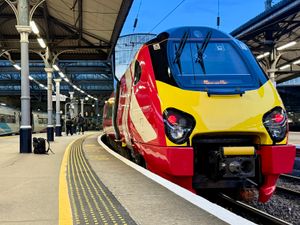
At present, London Midland runs the West Midlands Rail Franchise, which runs trains from Shrewsbury into Telford, Wolverhampton and Birmingham.
But that deal ends in October next year, and three rail operators have now been shortlisted for the continued running of the service, which also includes management of stations in Telford, Shifnal and Cosford.
London Midland has submitted a bid to continue running the service, which the company – run by Govia, a joint venture between French transport giant Keolis and Newcastle's Go-Ahead Group – has managed since 2007.
It will be competing for the right to run the service with West Midlands Trains Ltd, a subsidiary of Abellio Transport Group, a subsidiary of the Dutch national rail company, which would be minority owned by the East Japan Railway Company and Mitsui & Co, which is also Japanese.
The final contender for the franchise is MTR Corporation (West Midlands), a subsidiary of the UK arm of MTR Corporation, which operates Hong Kong's mass transit railway.
Rail minister Claire Perry said: "The West Midlands franchise serves both commuters and long distance passengers and we are confident these companies will create high quality bids that can deliver better journeys for all.
"Today's announcement marks a key step forward in giving passengers improved services across the region and beyond."
The three contenders for the franchise must now demonstrate how they will deliver better journeys for passengers, the department said.
The network, which operates 1,300 services and incorporates 170 stations – 145 of which are directly managed by London Midland – was used by 78 million passengers in the 2013-14 financial year.
The franchise document, published in December, says that the new operator must prove they are capable of providing the capacity to handle increased usage, make it easier and quicker to travel between key centres, run trains on time and provide better facilities at stations.
They must also make the network easy to understand for passengers, and provide value for money.