Welcome to India - TV review
Low and unfair rates of pay, long hours, not enough holiday, an unresponsive HR department and dirty cluttered offices are just some common workplace pet peeves at the top of people's lists.
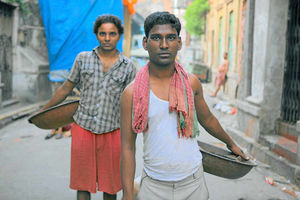
Compare that to some complaints our colleagues on the Indian subcontinent may have. Like a gold sweeper who has his skin burnt off on a daily basis with nitric acid to recover microscopic gold filings from dust in a jewelery quarter – Health & Safety would have a field day!
For another, Rajesh who runs an illegal bar on Mumbai beach with his wife Sevita, may have his children taken away from him by the local loan shark or watch his tarpaulin and bamboo stick 'beach apartment' demolished by bulldozers at any moment.
This is the reality of people under the microscope in the fascinating three-part BBC2 documentary series, Welcome to India.
With a growing population of 1.2 billion, my idea of cluttered went right out of the window and there is no such thing as personal space here where everyone from new born babies to the sick and old, sleep side-by side with rats, foxes and dogs in stifling 30 degree temperatures.
Two main characters are explored in the first episode, eeking out an existence on the fringes of society. Given the conditions and adversity they face at every turn, I couldn't help imagine how I would react to some of the job descriptions on offer like handling molten mercury without any safety gloves; inhaling noxious fumes while extracting gold; climbing into suffocating drains, filled with filthy sludge or risking your children to support a business. I don't think I'd be whistling and smiling while I worked like these characters did.
"I'm free at last," declares Kaale who came to Kolkata in search of gold and earns a living sweeping the streets of the jewelry district. He manages to escape an exploitative relationship with his landlord and gold buyer only to see himself embarking on a new career that involves dredging rat-infested sewers, half naked to retrieve sacks of sludge in the twilight hours with his bare hands – hardly what you would call freedom.
I subconsciously held my nose as he declared: "This is really good stuff," with a face-splitting grin as he emerged from the claustrophobic drain, splattered with goodness knows what from head to toe.
If you missed it go online now and watch the roof-top scene where the ambitious Kaale and his motley crew of gold-sweepers use alchemy to turn what is effectively mud into gold in a scene even Heston Blumenthal would be left gawping open-mouthed at.
After their controversial love marriage Rajesh and Sevita support their kids' future with some impressive improvisations, including running their house as a makeshift beach pub selling cane liquor, "I'll just turn on the air conditioning," jokes Sevita as she props open the tarpaulin.
When Rajesh realised it was time to pack up his home into plastic bags, the nod came from a council official, who was drinking in his illegal bar, providing Rajesh with funds to buy more moonshine on the black market. As the council used what seemed liked excessive force to knock down the shanty town which was home to 40 families, onlookers quizzed one another about the supplies they could share to rebuild. By the next day, the rabble of homes had been reassembled as if nothing had happened.
Corrupt police officers make their presence known around the city, beating the book selling gangs only to keep the fines. One seller, Ajay lost a hand in an accident and in a heartbreaking scene his friends class him as 'lucky' as it makes people want to buy more books from him.
He is another character who is captivating to watch. Lord Sugar would no doubt be able to use his charming selling skills as he dives between lines of cars and cuts a deal in the time it takes for the traffic lights to turn green.
But this documentary is not a sob story but one of success and above all – the enduring human spirit. Aside from obvious poverty and hardship I think we have a lot to learn from our Indian cousins.
Despite such adversity, they manage to work seriously hard, support one another and seem able to conjure up profit out of any situation – all with genuine enthusiasm and a belief that they can change things.
Desperation drives people on and I can't believe that all Indians are quite so enthused about their daily grind but the show certainly left me feeling inspired and put into perspective my problems of poor IT systems and mediocre coffee!
Maria Fodor