New BBC drama Call the Midwife brings taste of life in 1950s
It's been absolutely freezing in my house this weekend. Why does a central heating boiler decide to pack up on the coldest day of the year?
It's been absolutely freezing in my house this weekend. Why does a central heating boiler decide to pack up on the coldest day of the year?
Boiling the kettle for a shave seems archaic in 21st Century Britain – never mind mustering enough hot water for a bath. It all becomes a bit of a military operation, with saucepans bubbling and an electric kettle whirring away constantly.
This temporary setback – well I am assured all will be mended tomorrow – can only be viewed as an inconvenience these days. It's like being plunged back in the 1950s. And that is exactly where viewers of last night's TV drama, Call The Midwife, were so vividly transported.
Read more TV reviews
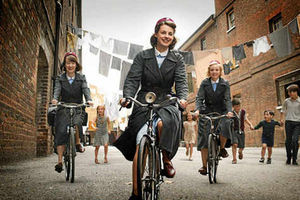
In the opening shots, a glamorous newly-qualified midwife, Jenny, timidly arrives in the East End of London, full of ambition and hope. The stunning backdrop of 1957 London, in all its brick and cobbled glory, with folk milling about beneath drying washing as children play and heavily pregnant mothers scrap under the arches, was superbly recreated.
Arriving at her destination, the midwife discovers she is not to be based at the hospital she believed, but instead a convent.
Here, nuns – played by among others Jenny Agutter and Pam Ferris – represent the backbone of the small team of midwives. Together, they provide all the assistance they can to help impoverished mums-to-be, with a bag of goodies alien to the midwife of today.
The exterior shots of London were fabulous – a perfect balance of gritty reality and nostalgia. As was the depiction of squalour, particularly in many of the households. From the expression on young Jessica Raine, who plays Jenny in this six-part series, you could almost imagine the smells coming from the homes of poverty-stricken residents.
Amid the smoggy streets, joy turns to tragedy and it is young Jenny who must pick up the pieces. Happily all turns out well, with a cute little baby boy sneezing his way into life, all snuggled up in a fluffy towel. This could have all come across as sentimental and twee, but thankfully for the viewer, this proved to be a warm, realistic nod to the early days of our often maligned NHS.
It had certainly been a tough introduction for Jenny.
One character, Pearl, a tough-as-nails mother played brilliantly by Lorraine Stanley, is visited by Jenny. Of all the homes we take a peek inside, this is by far the worst.
Making a cup of tea for her visitor in her one good cup, Pearl, grounded in the truth of her circumstances, senses the midwife's discomfort. Pearl takes a look around her surroundings says something along the lines of: "You must think we are all scum?"
"No," replies Jenny. "I think you are all heroines."
As the first episode ended, highlights for the next part focused heavily on a character played by award-winning comedy actress Miranda Hart.
This is a must for anyone who appreciates well-acted, quality drama that doesn't rely on sugar-coated sentimentality. It's also nice to see the East End of London from a different perspective than that of Walford.
Judging by how things used to be, the residents of Albert Square have little to moan about. But you try telling them that.
Paul Naylor