Shropshire Manor’s Role as ‘Nation’s Safe Box’ reaches Parliament
A North Shropshire manor house took centre stage in the House of Commons earlier this month, as a series of formal parliamentary questions has placed the county’s role as a guardian of English identity onto the official record.
On 3 March 2026, Helen Morgan, the Member of Parliament for North Shropshire, tabled several written inquiries to the Department for Culture, Media and Sport, marking a definitive milestone in the long-standing investigation into the national significance of Soulton Hall.
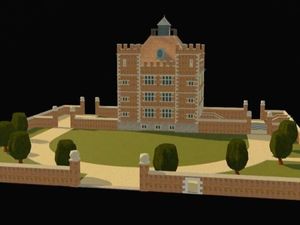
These developments follow the work of a committee of inquiry, which has spent considerable time attending to the evidence and structured its findings as a serious matter of national heritage. The move follows the detailed Byrga Geniht studies, which suggest it is possible that this Tudor-era estate was far more than a local residence. The inquiry explores the potential that the hall was a sophisticated, purpose-built repository designed to safeguard the country’s most vital cultural assets during the 1550s.
Central to this is question UIN 117447, in which Mrs Morgan asked the Secretary of State what assessment has been made regarding the study's identification of Soulton as the likely preservation site for the High Altar stone of Old St Paul’s Cathedral. The inquiry suggests the stone may have been recovered and secured in the Shropshire countryside during a period of extreme volatility in London, effectively moving the "spiritual heart" of the capital to our county for safekeeping. This same inquiry references a specific archaeological footprint consistent with the 16th-century memorialisation and reburial of Erkenwald.
While these findings are presented as a compelling possibility rather than a final certainty, the committee of inquiry takes the evidence very seriously. This positioning of the hall as a potential "safe house" links the site directly to the stewardship of Sir Rowland Hill and highlights a possible deliberate strategy by the figures of the era to protect national patrimony by placing it in the hands of Shropshire's private estates.

The MP’s questions also move directly into the practicalities of managing such significant national history. Through UIN 117448, Mrs Morgan has challenged the government on what steps are being taken to support private stewards who manage such significant national patrimony. The inquiry suggests that Shropshire has, for centuries, quietly carried the burden of looking after these nationally important assets, and it implies that formal funding and support ought to be forthcoming to recognise the county’s pains in preserving this shared identity.
The social and cultural implications are further highlighted in UIN 117449, which asks what support the Department provides for faith interface and reconciliation work following such discoveries. Finally, UIN 117450 seeks an assessment of how Shropshire’s 2026–2029 Destination Management Plan and a partnership with Essex could lead to a national renewal of the ‘Grand Tour of England.’
By entering these findings into the democratic record, the historical and architectural code of the hall is no longer a private matter but a public fact. This move aims to finally bring national investment to the region in recognition of its role as a quiet protector of the nation’s past. As the Secretary of State prepares a formal response, a focus remains on ensuring Shropshire is properly supported for its centuries of stewardship.