Top soprano wows audiences at Shrewsbury Symphony Orchestra concert
Elinor Rolfe Johnson stunned the audience at Shrewsbury's Alington Hall, with a moving performance of Wagner's 'Liebestod' from Tristan & Isolde, accompanied by the Shrewsbury Symphony Orchestra. Review by D.S. Lewis. Images by Andy Bell Photography
There is a strange intimacy to be found in sitting silently in a crowded auditorium where all are listening to notes laid down in musical hieroglyphs by a hand and brain long since extinguished.
Yet here I am, in the Alington Hall, at Shrewsbury School, on a chilly Sunday afternoon in November, bathing in the Shrewsbury Symphony Orchestra’s delightful performance of the prelude and finale of Richard Wagner’s ground-breaking opera, Tristan und Isolde, the timeless love story where death is welcomed by the doomed lovers and thereby vanquished through their eternal embrace. Elinor Rolfe Johnson, a soprano with a beautiful and commanding voice, sang the part of Isolde, achieving the transcendence with which Wagner imbued her final aria. The whole performance blended delicacy and emotional power with such precision that when the final note faded there was a momentary silence before the applause. There were stunned faces among both orchestra and audience, with some clearly moved to tears.
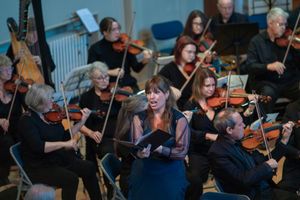
After a brief intermission there followed a wonderful rendition of Gustav Mahler’s Symphony No. 5, a piece that he began writing at the age of 41 and continued to revise for the rest of his life. He described it as “this primaeval music, this foaming, roaring, raging sea of sound”. Inevitably, it required a grand orchestra—in terms of both the range and number of instruments—enabling him to construct such a remarkable and varied collage of orchestral colour. From its opening solo trumpet fanfare, the symphony moves in an epic journey that encompasses funeral march, wild anger, reflection, and profound love, before ending on a note of joyous and energetic triumph.
Even some professional orchestras might think twice about programming two such powerful and influential pieces. And yet Shrewsbury Symphony Orchestra achieved this audacious feat with aplomb. Intuitively guided by the sensitive conducting of the ebullient and dynamic John Moore, the vast array of players—led by the talented and popular Alex Postlethwaite—conjured something truly remarkable.
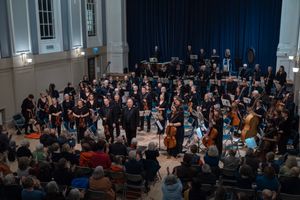
It was akin to watching an ornate ice pavilion being sculpted in real time, complete with soaring towers, sweeping ramparts and sinuous interconnecting paths. Yet for all its skill, extravagance and breath-taking artistry, this was a transient creation and all too soon the music melted into silence. It seemed barely conceivable that the effort of mere hand and breath could have fashioned something so profound that, even after the last echo of the final note had faded, the sensation of having been emotionally moved lingered. As the audience fragmented and dispersed, that profundity was carried into the darkness by a host of human hearts.
And though one must return to the pedestrian existence of everyday life, it felt that something had changed—something intangible but profoundly significant. For we had been taken on an emotional journey, conveyed by the skills and passion of the Shrewsbury Symphony Orchestra’s players. And thus the exterior world no longer looked quite the same: it had been altered by the genius and alchemy of music.