'And this our life, exempt from public haunt' - Open after 470 years: The prayer room hidden in a Shropshire country house since the Reformation
The owner of a country house in Shropshire dating back to Tudor times have told of profound discoveries which have led to a prayer room opening after 470 years
As a family, we have been profoundly moved by the discoveries at Wem's Soulton Hall that connect our home to the powerful cultural memory of St. Erkenwald: London's patron saint, and a Saxon prince who lived over 1,300 years ago -- during the time England itself was still forming.
Since Tudor times, Soulton has always held itself, sometimes prominently, sometimes hidingly, as a custodian of a spiritual memory that transcends later denominational splits.
What was previously too dangerous to articulate in public, due to safety concerns that persisted even into the 20th century, is now being more confidently expressed, and my family's commitment, shared privately over a period of years respectfully with historians and religious leaders, and now publicly, has been firm: to treat these insights with the deep sensitivity they deserve, and to honour it as a shared heritage of the Undivided Church and of culture more widely.
This work has required careful pacing, and things have been consistently and deeply reflected upon before releasing them.
In keeping with this spirit, we are taking a significant step: for the first time in nearly 470 years, the Tudor Prayer Room -- a space of private contemplation which came about for a community facing persecution at a time of great violence and pain -- will be accessible to the public on our heritage tours.
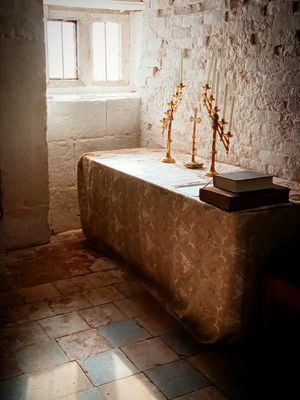
The Prayer Room, which is still sincerely used, offers a glimpse into the careful preservationist and humane instincts of our forbear, Sir Rowland Hill, the Lord Mayor of London who oversaw the building of Soulton Hall around 1556 during a time of intense religious change.
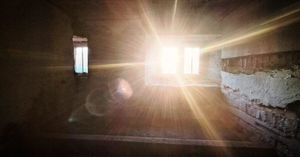
We are also now able to speak more openly about the significance of the Aedicule (small chapel, which shares a window with the Prayer Room), which is already part of the tours and is aligned with the Easter sunrise. Within this space rests a simple, profound artefact: a stone which is interpreted as an altar. Given the widely-held Protestant association of Sir Rowland Hill, this more Catholic artefact invites serious meditation, and is a kind of mystery.
Some biographical detail informs how we might assess what is and was obviously an immensely important item which is placed in the senior room in the whole house. Sir Rowland Hill was Lord Mayor of the ancient City of London in 1549-50. In June, 1550 (exactly 470 years ago last summer) Rowland Hill received orders that the high altar of St. Paul's was required to be removed. Hill issued an unusual order to suspend the public holiday for St. Barnabas’s Day. That night, the altar was pulled down and broken, leading to a violent struggle in which tragically a man died. We believe this stone was rescued on that very night, preserving a physical piece of the historic cathedral at immense risk.
Visitors will now experience these two unique spaces: the aedicule with the St. Paul's stone, representing a physical act of preservation born from tragedy, and the newly accessible Tudor Prayer Room, embodying the quiet continuity of faith.
Now that these things can be said concerning the work of Sir Rowland Hill, the 1550s can be seen as less of a story of division and the role of Old Sir Rowland (who served on both inquisitorial commissions for Mary and Elizabeth I respectively) can be assessed with a more complete context.
This is a story of cultural preservation, demonstrating great respect for people and ideas that may be deemed opponents, even at great personal cost.
It is a profound illustration of culture getting through by the skin of its teeth, and ultimately, a testament to humanity.
We invite all who are interested in history, faith, and the deepest aspects of our shared heritage and humanity to visit Soulton Hall and share in this rediscovered moment of our common heritage.
Tours are available for booking now via the Historic Houses Association (HHA) website and are linked directly from the Soulton Hall website.