Keir Starmer to pledge cost-of-living support amid Middle East crisis
The Prime Minister will on Monday say that helping families with living costs is ‘my first priority’.

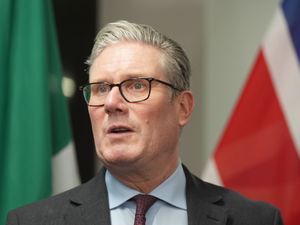
Sir Keir Starmer will pledge to help households with the cost of living amid the energy price spike caused by the war in the Middle East.
The Prime Minister will on Monday say that helping families with living costs is “my first priority”.
Plans to help people who use heating oil to warm their homes will be revealed by Sir Keir as he hosts a press conference in Downing Street.
The announcement is set to come after Chancellor Rachel Reeves said Treasury officials have “found the money” to help the 1.5 million households relying on heating oil.
The fuel is not protected by the energy price cap and its price per litre has doubled as a result of the stranglehold on oil leaving the Middle East since the US-Israeli war with Iran began.
Inside Downing Street, Sir Keir will say: “It’s moments like this that tell you what a Government is about.
“My answer is clear. Whatever challenges lie ahead, this Government will always support working people.
“That is my first instinct – my first priority – to help you with the cost of living through this crisis.”
The Prime Minister will also raise concerns about claims that suppliers of heating oil have cancelled orders and then jacked up prices.

Last week, Ms Reeves and Energy Secretary Ed Miliband met oil firm bosses and forecourt operators to warn them against profiteering.
Representatives of the petrol station industry had threatened to pull out of the meeting because of “inflammatory language” from ministers.
In his press conference, Sir Keir will say: “I will not tolerate companies trying to exploit this crisis to make money from working people… if the companies have broken the law, there will be legal action.”
The Prime Minister will also insist that de-escalation of the war is the quickest way to reduce cost-of-living pressures for the British public.
Sir Keir will say: “We will continue to work towards a swift resolution of the situation in the Middle East.
“Because there is no question that ending the war is the quickest way to reduce the cost of living.”
Ministers have also faced questions about the possibility of rowing back on plans to raise fuel duty for the first time in 16 years.
Mr Miliband suggested the Government was open to the idea, should the war continue into the latter half of the year.
He told the BBC: “Let me answer that by saying this, which is, I’ll be candid with you, we don’t know how long this conflict is going to go on and therefore, with five months to go until September, we will have to see where we are, obviously.”
Sir Keir on Sunday spoke to Donald Trump for the first time since the US president called for help from other nations to secure the Strait of Hormuz.
Tehran’s blockade of the key shipping route for oil leaving the Middle East has resulted in long queues of tankers being unable to leave the region, driving up global energy prices.
Mr Trump on Saturday urged the UK and other nations impacted by the blockade to send warships to the region to protect oil tankers through the narrow sea passage.
The Ministry of Defence has said discussions about securing the strait continue with allies, while defence sources have suggested minehunting drones could be deployed to the region amid worries the Iranian regime has laid sea mines.
Mr Miliband also suggested Britain’s minesweeping ships were being considered for deployment.
The Royal Navy’s last minesweeper in the Middle East recently returned to the UK for maintenance.
Elsewhere, Foreign Secretary Yvette Cooper has mobilised more than £5 million in aid for humanitarian organisations in Lebanon amid a war between Israel and the militant group Hezbollah.
She said: “I am gravely concerned about the developing conflict in Lebanon and the scale of the humanitarian impact.
“We must not see a widening of this conflict which is already causing significant civilian casualties and mass displacement.”