Assisted dying Bill contains ‘Trojan horse’ for upending NHS, says former chief
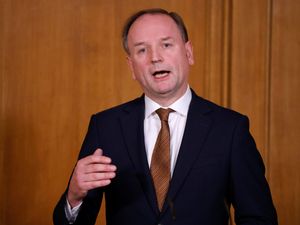
Lord Stevens told the House of Lords he does not believe assisted dying should be within the remit of the health service.
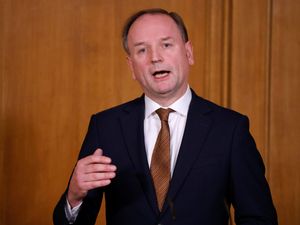
A former chief executive of the NHS has warned the assisted dying Bill contains a “Trojan horse clause” for fundamental change to the UK’s health service “by the back door”.
The Terminally Ill Adults (End of Life) Bill, as currently drafted, would establish a process within the NHS for people with six months or less to live to seek an assisted death.
Lord Stevens of Birmingham has argued assisted dying is outside the scope of the current NHS and it should be established separately, if at all.
The independent crossbench peer particularly took issue with a clause in the Bill which states ministers may make regulations “for any provision that can be made by an Act of Parliament, the only constraint being that they may not amend the Act itself”.
Lord Stevens said he would regard this “as a Trojan horse clause for fundamental change to the National Health Service by the back door”.
He added such powers are “very rare” and this exact wording has only been used before in Brexit-related legislation.
The former NHS boss supported amendments put forward by fellow crossbencher Baroness Finlay of Llandaff, a professor of palliative medicine who is the former president of the British Medical Association and a vice-president of Marie Curie.
Speaking on the 11th day of committee in the Lords, Lady Finlay had said her amendments “make it clear that any health or social care professional involvement in the assisted death service is separate from their health or social care employment, and their employer must know of their involvement”.
She added: “This is a separate service that must not jeopardise the care of other patients.
“The Royal College of General Practitioners clearly stated that any legislation must ensure that any assisted dying service should be seen as a stand-alone service and not be seen as core GP work.

“They are clear any assisted dying service needs to be separately and adequately resourced and not in any way result in a deprioritisation of core general practice or palliative care services.”
Lady Finlay said the patients would “continue to have their usual clinicians look after them as always, whilst in parallel they could be assessed for eligibility against the criteria”.
She later said: “These amendments would create a clear, streamlined service with greater transparency and with clear, defined oversight that is more easily monitored.
“They’ve been written to respond to the request from the Royal College of GPs, the Royal College of Physicians and the Royal College of Psychiatrists and the Association for Palliative Medicine that an assisted death service must be a separate service.”
Leading psychiatrist Baroness Murphy, however, warned the separation of assisted dying would lead to “isolation” of dying people in the decision-making process.
She also said it would be “unlikely” that any clinician providing care for patients will take part in any assessment.
“It is utterly crucial that we should not separate these people off when they are in the process of dying and reject them,” she said.
“It should be part of the palliative care provided to them. It almost certainly in other countries usually happens as part of a palliative care service… we should not separate them off, we are there to support them during this process.”
Conservative former minister Lord Deben, however, rejected the idea that assisted dying is part of palliative care, and argued many people see it as a “wholly separate thing”.
He said: “Palliative care, looking after people in the very best way that we can in the most difficult time of their life, is utterly separate from the idea that they can instead decide to kill themselves.

“Now it is perfectly reasonable for some people to want to have that choice. But it must be a distinct choice. It must not be mixed up.”
Lord Deben, who was a government minister under John Major and Margaret Thatcher, added that he fears assisted dying will become a “cheaper alternative” for terminally ill people.
Labour peer Lord Falconer of Thoroton, a former government minister who is behind the Bill in the Lords, said: “I’m absolutely sure that Lord Stevens is not wanting the patient to have to embark upon a very complex bureaucratic procedure.
“He’s given reasons why he wants it kept separate from the NHS. My position as the sponsor of the Bill is whether it’s precisely separate or not, is not for me a key question.
“The question is that, if you are a patient and you want an assisted death, there is a practical and safe way of doing it that does not place an undue burden upon the patient.”
He said Lady Finlay’s proposal was “too separate from the care of the patient”.
Lord Falconer later responded to an intervention from Lord Deben on whether assisted dying is part of palliative care, and said: “Dying is about giving somebody a good death. I think palliative care is about exactly the same thing.”
Lady Finlay later responded to Lord Falconer and said the issue of whether assisted dying is separate to NHS services was “unanswered”.
She said: “It’s not only funding. It’s about how people behave within a service and what they do.”