Draft rare cancers law offers hope to those with incurable brain tumours
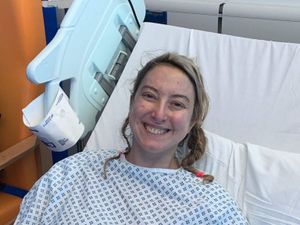
Abi Feltham was diagnosed with a brain tumour in May 2024 and was told she has 15 years to live.
A woman with incurable brain cancer said draft legislation which aims to increase the survival rates of rare cancers offers hope.
Abi Feltham was diagnosed with a brain tumour in May 2024 and was told she has 15 years to live.
Although this was “devastating”, the 37-year-old said she “fully expects to outlive” her diagnosis, with moves to strengthen the rare cancers research sector being brought forward.
The Rare Cancers Bill proposes to set up a database of rare cancer patients so they can be easily linked to relevant clinical trials.
It will have its third reading in the House of Lords on Friday.
Rare cancers are complex, often deadly, tumours which affect less than six in 100,000 people.
There is a lack of incentive for pharmaceutical companies to develop specialised treatments currently, because of the relatively small market for specific drugs.
The Bill would require the Health Secretary to review the law relating to so-called “orphan” drugs.
A national lead on rare cancers would also be established under the Bill’s proposals, with the responsibility of promoting and facilitating research.
Ms Feltham, who lives in London, had been experiencing headaches and blurred vision prior to her diagnosis, but initially put the symptoms down to caffeine consumption.

Speaking to the Press Association, the Brain Tumour Research ambassador said: “I was diagnosed with grade three oligodendroglioma, and my brain cancer is incurable, full stop, incurable.
“I have a lot of living left to do, but there will come a time where my oncologist will tell me there’s nothing more we can do.
“So with the Rare Cancers Bill coming up, if things change, and I will have easy access to clinical trials and to new drugs, that gives me hope.”
Ms Feltham added: “I was given 15 years to live, I fully expect to outlive that, and to live longer than 15 years, but that’s what my diagnosis came with.
“I always imagined myself being an old woman, and to know that might not be a possibility is devastating. It’s disappointing.
“We all have a limit, we all have allocated time on Earth. But when you live with a serious diagnosis and you live with a life-limiting illness, you’re confronted with that every day.
“It’s not something that’s just in the back of your mind, you think about it every day.
“But I do have that sense of positivity, and I have that sense of not wasting my time on sweating the small stuff, I don’t overthink things.”

If passed by peers on Friday, the Bill will become law following royal assent.
It was brought forward by Labour MP Scott Arthur in the Commons, inspired by his father-in-law who died after being diagnosed with glioblastoma.
The Edinburgh South West MP has previously said the current “left behind nature of rare and less common cancers is unacceptable”.
“Other countries have measures in place to encourage this life-saving research, it’s time the UK does too,” he added.
Dan Knowles, chief executive at Brain Tumour Research, said: “Next month, more than one thousand people will be told they have a brain tumour.
“Through a greater focus on research, access to clinical trials and smoother pathways to drug approval, we hope to see change and improved survival rates for brain tumour patients.
“We will be working to ensure the law, along with other commitments in the National Cancer Plan, is implemented and lives up to its promise for our community.”