Shrewsbury Town's £500,000 losses hit cash reserves
On the pitch, Shrewsbury Town FC enjoyed a terrific season in 2014-15. The club was promoted from League Two, its defence smashed records for clean sheets, and the new Greenhous Meadow stadium was packed to the rafters as Jose Mourinho brought Chelsea to town for a thrilling Capital One Cup tie.
But accounts covering the season, newly published with Companies House, reveal that the success came at a cost as losses of almost £500,000 chipped away at cash reserves.
Player sales since the period's end – notably Ryan Woods' transfer to Brentford and Connor Goldson's move to Brighton & Hove Albion – have helped to bolster those reserves, which stood at £904,150 at the period's end on June 30 last year.
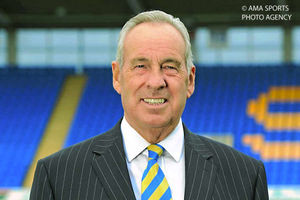
But in the long-term, chairman Roland Wycherley says, the need for improved revenues and greater financial prudence is clear. He has refused to borrow to fund short-term success.
In a statement accompanying the accounts he said: "Whilst enjoying success on the field, not only in the league but in a fantastic League Cup run culminating in the thrilling tie against Chelsea in front of a record attendance at the Greenhous Meadow, the additional income produced in the year has not been sufficient to offset the extra wage costs, especially of the playing staff, that the past year has seen.
"Unlike some years in the past there was little exceptional income from player sales to balance the books with the result that losses increased from £285,253 in 2014 to £480,152 in 2015, with the result that cash reserves maintained by the club dropped below £1 million for the first time sine we have been at the new stadium.
"Once the cash reserves are depleted the club would face considerable difficulties."
The club moved to its new home from Gay Meadow in July 2007, and the 10,210 who packed in for last season's Chelsea match was a record for the stadium.
Mr Wycherley also said in the accounts that new chief executive Brian Caldwell had been brought in to build on predecessor Matt Williams's work.
"Brian is joining us with a clear mandate to bring normal income and expenditure firstly into line then into surplus," he said.
"Income from player sales and other irregular and unpredictable sources can then be used to invest in the stadium, the academy and prudently in the playing staff to the long-term benefit of the club.
"This might not result in everything our supporters want this year, but it will create the platform for greater success in the long term."
Adding that proposals to improve the club's financial position – "ranging from the sensible to the hare-brained" – often proposed increased investment, Mr Wycherley said that would necessitate risky borrowing to fund short-term success.
He said: "My obligation as chairman and a board member of the club, therefore, is not to pander to the short-term shouts for spending and change but to remember that a club with nearly 130 years of history needs to be operated on the basis that it will be here, hopefully, for another 130 years at least.
"The club is much more than a single match or season, however important these things seem at that moment, and whilst it would be the easiest thing in the world to give in to the demands of the movement with expedient spending it would be wrong.
"I have for more than 20 years followed this approach and as a result we have a club that remains, compared with its peers, strong in assets and free of debts whilst achieving success on the field."
Mr Wycherley added: "The board share the aspirations of our supporters in becoming a Championship club, but we have to temper ambition with realism and without the injection of significant investment from outside the club, to challenge for such will take a significant period of time and careful planning."
Turnover increased on the previous year, when Town were relegated from League One, from £3.77 million to £3.98 million. As well as the benefit of the Woods and Goldson transfer fees, next year's results are also likely to be bolstered by the money-spinning FA Cup match against Manchester United in February, from which the Red Devils emerged as 3-0 winners.
The average number of staff employed by the club also rose, from 154 to 162, with the average number of employees each month increasing from 17 to 23.
The annual wage bill rose from £2.42 million to £2.72 million.
This season Town are still fighting against relegation back to League Two at the first time of asking, but have pulled out of the bottom four after a recent string of unbeaten matches.
Today the team visits south London club Millwall in the first of seven matches that will decide which club plays in next season.