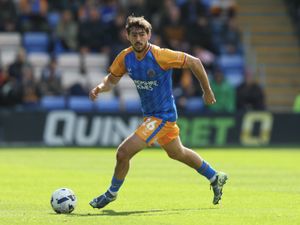
Pictures and analysis of Shrewsbury 2 Stevenage 1
A change is better than a rest, as the old adage goes.
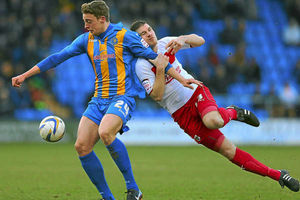
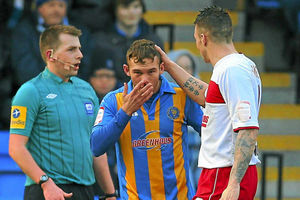

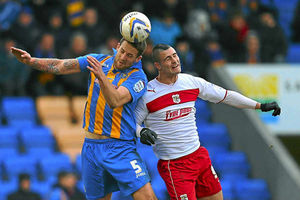
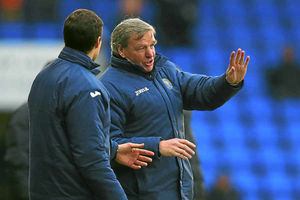

A change is better than a rest, as the old adage goes.
But both proved beneficial for Marvin Morgan as he stepped off the bench to become Shrewsbury's late match-winner.
With Graham Turner stiffening the competition for places up front, with the loan captures of Tom Eaves and Chris Porter, there was no place for the big striker in the starting XI.
Morgan has been left shouldering the weight of Salop's frontline, almost single-handedly at times this season, at an obvious cost to his strike rate. But his exclusion did him the power of good as he emerged with the hunger to inflict the decisive blow.
With just one goal to his credit in 18 games before Saturday, the 29-year-old has been an architect around the penalty box.
But you'd have to have cast your eye around much of the weekend Football League highlights to find a more skilful finish than the one he conjured up with four minutes left on the clock.
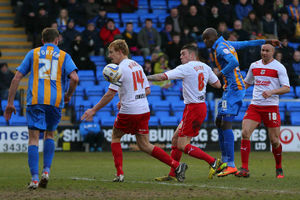
With his team heading for an unwanted 14th draw of the campaign, Morgan deftly clipped Jon Taylor's cross out of reach of his marker before flicking with the outside of his boot into the far corner beyond veteran keeper Chris Day.
It not only drew him level on seven goals with fellow substitute Taylor at the top of the club's modest scoring charts, but it meant Town were able to register their first back-to-back victories of the season – and their first in the third tier in 16 years.
The margin between success and failure is narrow near League One's basement and Shrewsbury's struggles to pull clear haven't been helped by their failure to put away the likes of Hartlepool and Bury at the Greenhous Meadow last month.
But the weekend triumph has opened a much-needed eight-point gap between them and fourth-bottom Colchester at just the right time. The fixture list is getting noticeably harder with the visit of high-flying Doncaster on Tuesday followed by a trip to in-form Walsall.
It's the stage of the season where results need to be ground out, particularly against the likes of Gary Smith's well-organised team. Stevenage have given little away and have maintained a physical outlook during their rise from non-league.
They took a deserved 20th-minute lead when James Dunne volleyed Marcus Haber's knock-down into the top corner.
And had Haber connected with Lucas Akins' cross over the face of goal moments later, Town would have been up against it.
But they rallied with some methodical and crisp passing that created space for a Darren Jones effort, which was blocked, and a shot from Steve McGinn, which the Watford loanee toe-poked a yard past the post. Bolton youngster Eaves helped soften up the Stevenage rearguard with a couple of barn-storming runs, which if he'd produced a bit more quality with his final touch may have slipped him in on goal.
But Paul Parry showed finishing finesse when he rammed a right-footed equaliser into the bottom corner on 31 minutes after Stevenage allowed a Matt Richards' cross to drift to the far side of the box.
Powerhouse Eaves emphasised Town's hunger for three points when he opened the second-half with an angled drive that just cleared Day's woodwork.
And only the outstretched boot of Stevenage skipper Mark Roberts stopped the 21-year-old from muscling in on goal.
But while Shrewsbury largely had dominated play after their wretched opening spell, they were glad, again, to have a keeper as excellent as Chris Weale to avert trouble when it arose.
And it did when Haber crept in to finish Luke Freeman's cross at the far post. Weale's reflexes were sharp enough to keep out the Canadian's header.
But after Jones survived a penalty appeal when substitute Steve Beleck went flying, the Salop boss' changes proved a masterstroke. Taylor skipped free and Morgan delivered the joyously-received winner.
Yet it still needed another sinew-stretching save from Weale to keep out a Roberts header in stoppage time before Taylor sprinted clear for what should have been the coup de grace, only for Day's block to be followed by a goal-line clearance.
By Gwyn Griffiths