The history of Wolves and Liverpool's clashes in the FA Cup
Wolves author and historian Clive Corbett takes a look at the club's record against Liverpool in the FA Cup.
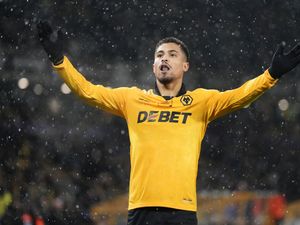
A miserable league season with a fleeting taste of FA Cup glory – is that how Wolves’ 2025-26 season will be remembered?
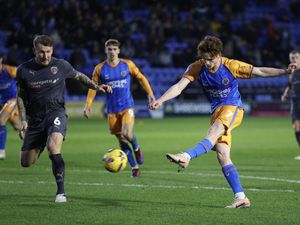
After Shrewsbury and Grimsby, the omens continue as Liverpool are welcomed to Molineux on Friday.
First of all, Wolves have a good record against Liverpool in the FA Cup, having won five, drawn one and lost three of the nine games played.
Hidden behind these bare facts is the alluring truism that every time they have beaten the Reds at home (four times) Wolves have gone on to at least reach a semi-final of the FA Cup and in three cases a final (four if one includes the John Richards-inspired 1-0 win in the fifth round of the FA Cup in December 1973).
Let me take you on a short journey of self-delusion – I will be skimming over defeats.
In 1896, Brierley Hill-born Bill Owen and Walsall man Harry Wood scored the goals to send the Wanderers through to round three. They made it all the way to the final at Crystal Palace where they lost 2-1 to The Wednesday.
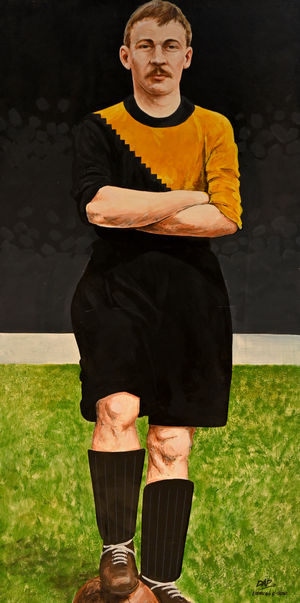
43 years later war clouds were gathering as Liverpool were again welcomed to Molineux. A club record crowd of 61,315 watched on as the hosts roared into a 2-0 lead in the first 23 minutes – goals coming from Stan Burton and Dennis Westcott.
Future Reds boss Joe Fagan halved the deficit with a penalty after 54 minutes but Alex McIntosh and Dickie Dorsett sealed a comfortable win for Major Buckley’s men with goals in the last quarter. The Wanderers went on to storm to a Wembley final, beating Everton and Grimsby on the way, where they were beaten 4-1 by unfancied Portsmouth.
10 years later and again in the fifth round Liverpool again came to town, this time watched by 54,983 souls. Jimmy Dunn put Wolves 1-0 up just before the break but Cyril Done equalised on the hour mark. A tense affair was settled in favour of the hosts when Sammy Smyth and Jimmy Mullen scored in a spell between the 72nd and 79rd minutes. The win saw Wolves again make it all the way to Wembley, this time seeing off West Bromwich Albion and Manchester United en route to a 3-1 win over Leicester City. Liverpool returned to Wolverhampton in 1952 as Done and another future manager, Bob Paisley, netted to secure a 2-1 win.
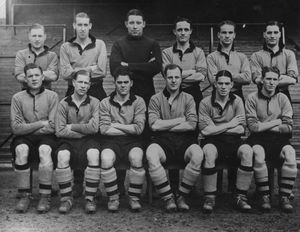
In December 1973 John Richards scored the only goal of the game as the Reds were dispatched at Molineux in the League Cup quarter-final. Once again the road led Wolves to a Wembley final and a 2-1 defeat of Manchester City the following March.
Astonishingly there was a 65-year gap between Wolves-Liverpool encounters in the FA Cup. In January 2017 Wolves, by then in the Championship, shocked the Reds 2-1 with goals from Richard Stearman and Andreas Weimann. But there would be no semi-final as the match was at Anfield, the first ever there between the two teams.
The most recent Wolves home win in the competition came in a third round tie in January 2019 when Jurgen Klopp made the mistake of fielding an under strength side. Raul Jimenez puts Wolves ahead in the 38th minute after Diogo Jota had robbed James Milner.
Although Divock Origi equalised in the 51 minute, four minutes later a special from Ruben Neves sent Wolves through. Wolves made it through to a semi-final with Watford that ended in tears despite them having a 2-0 advantage with the clock running down.
So, four home FA Cup wins, all resulting in a semi-final, three in a final - the omens are there. But is this all nonsense? Let’s wait and see.