Long read: The story of an unsung Wolves hero
Wolves authors Clive Corbett and Steve Gordos pay tribute to the late Terry Wharton.
On January 3 Clive was amongst a group of fellow diehards wending their way through the snow and ice to Molineux.
As ever this season we were travelling more in hope than in expectation, but things were put into perspective by the news that Terry Wharton had passed away.
Back in July 2017 Steve and Clive were fortunate to interview Terry at his home in Brewood for our book, ‘Golden Balls’. He and Sue gave us a typically warm welcome.
Terry was an unsung Wolves hero, suffering in part from the fact that his playing career at the club coincided with a decline in its fortunes. Terry joined Wolves aged 15 in 1957 and turned professional two years later. Like many others at the time Terry had to show great patience before earning a first-team debut, wearing the number seven shirt and scoring the second goal in a 2-0 home win over champions-elect Ipswich Town on November 11, 1961.
He played 25 league and two FA Cup games that season, scoring 13 goals, netting twice in his first cup game, against Carlisle United, on January 8. Terry was a first team regular over the next five and a half seasons, enduring relegation in 1965 but helping the team to promotion just two years later. He had some tough acts to follow - England wingers Johnny Hancocks and Norman Deeley among them. Wharton collected 79 goals during his time at Molineux and though he is rightly remembered as deadly from the penalty spot, only 10 of his goals came from spot kicks. He made a lot of goals for others, too.
So, back to the start. Terry was born in Bolton on July 1, 1942 and in successfully plying his trade as a wingman, he was following in his father’s footsteps. Wharton was often referred to as ‘the son of former Manchester City winger, Jackie’, yet his dad had only a brief spell at Maine Road - 26 games. His most successful time was with Blackburn Rovers for whom his 138 matches included an FA Cup semi-final against holders Newcastle United in 1952.
Rovers were beaten in a replay at Elland Road after a goalless draw at Hillsborough. Terry remembers attending many games during his dad’s time with Rovers, including the semi-final at the age of nine.
Jackie had begun his career with Plymouth Argyle before being signed by Preston North End in 1939. The Lancashire side were a top-flight club in those days, having won the Cup the previous year. When the 1939-40 season began Jackie played in the opening three games in a team who included the great Bill Shankly. With the outbreak of war the season was aborted but Wharton senior played many games for the club during wartime.
They did not field a team in the 1942-3 season so he played for Bolton Wanderers and it was in Bolton that Terry was born on July 1, 1942. With Preston again not fielding a side in 1943-4, Jackie played 24 games for Blackburn Rovers and three for Rochdale. The following season, Preston were in action again and he had a full season with them. Jackie, who was on the left wing when the great Tom Finney made his league debut for Preston in the first season when league football resumed after the war, moved to Manchester City in 1947 and then to Blackburn just over a year later. After his five-year spell at Blackburn he had a couple of seasons with Newport County.
Terry had been a successful player for the town’s schoolboy side but Bolton Wanderers did not show any interest in him. However, a Notts County scout spotted him and recommended him to County where legendary former Everton and England centre-forward Tommy Lawton was manager. Young players with Terry at that time included Tony Hateley and Jeff Astle. Hateley became a centre-forward with Villa, Liverpool and Chelsea while Astle became an England international and a goal scoring legend at West Brom. By the time that County decided to let Terry go, Lawton had lost his job and was doing some scouting for Stan Cullis.
That proved a turning point for Terry as Lawton recommended him to Wolves’ chief scout George Noakes.
Having signed amateur forms, Terry’s career with Wolves ended almost before it began. Playing at Malvern Town in a Worcestershire Combination match, Terry and Co trailed 2-0 at half-time. Manager Cullis was at the game and came into the dressing room. Said Terry, “He had a cup of tea in his hand and just called me over and said ‘Terry, I’m writing to your dad, I’m sending you home.’ It broke my heart it did but in the second half I scored two and made one and we won 3-2. The following Monday I was working, cleaning the stand and kept waiting to be called into the office - but I wasn’t and nothing more was said. That was Stan.”
Terry can also smile when he remembers that having signed professional forms one Saturday morning he played in a side who hardly shone at Bromsgrove Rovers in the afternoon. “We lost three nil and I had a stinker and Noddy (Alan Hinton) had a stinker and Stan called us in on the Monday morning. He said: ‘What have I done? What have I flapping done?’ That was how he was.”
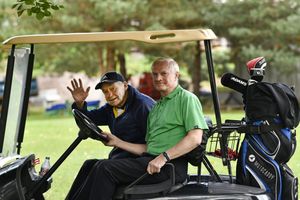
So the young winger stayed at Molineux and began to work his way up through the many teams Wolves then fielded until he had established himself in the reserve team. When Cullis signed winger Mark Lazarus from QPR early in the 1961-2 season, Terry must have thought his progress towards a first team place had taken a setback. However, the Lazarus move did not work out, he lost form and for the home game against Ipswich Town on November 11, 1961, Wharton was given his chance. Lazarus had not only lost form but had not endeared himself to Cullis by his off-the-field behaviour and so the boss decided to turn to Terry. He did not call him into the office to tell him the good news. A shake of the hand or a pat on the back and a “Well done, son” was not the Cullis way.
Terry remembered only too clearly how he was informed he would be making his bow in the First Division. He was told by former defensive stalwart Bill Shorthouse who was by then one of the Cullis backroom staff. “It was during training on the Thursday and Bill Shorthouse called me over and said: ‘You’re making your debut Saturday.’ I’d not had many games in the reserves and I think the last one was against Burnley. Ronnie Fenton was playing for them and he took a swipe at me. If he’d hit me I’d have probably hit him back and we’d both have been sent off.” A suspension then would have been a setback to Terry’s career prospects, putting him in Cullis’s bad books.
So all was set for his big day and with 19-year-old Alan Hinton on the left it meant Wolves fielded two teenage wingers in a league game for the first time since Alan Steen and Jimmy Mullen faced Manchester United in March, 1939. To complete a memorable day, Wharton opened the scoring with a glancing header to a Hinton cross and Hinton struck later to complete a 2-0 win over a side destined, under manager Alf Ramsey, to be surprise First Division champions that season. That Wharton header was a rarity for a player who possessed a vicious shot in either foot. The goal earned Terry and his father a place in football history - the only father and son to score on their Football League debuts. Jackie’s first game had seen him hit both goals in a 2-1 win by Plymouth Argyle over West Bromwich Albion on September 3, 1938. Those proved to be his only goals in 11 appearances that season.
“He was not a goal scorer, me dad,” recalled Terry, “but he was a good winger and could play on the right and the left, the same as me.” There would be some gentle joshing in later years between father and son as to who had the better debut. Terry’s mum, Elizabeth, would usually opt for her son as his had been in the old First Division while Jackie’s debut had been in the old Second Division. Wharton senior would plead in vain: “But I scored two goals.” He might also have pointed out that he was 18 while Terry was a year older when he made his debut. Jackie cherished the memory of his two goals against Albion and in time Terry, too, would have reason to cherish the memory of a game against the Baggies.
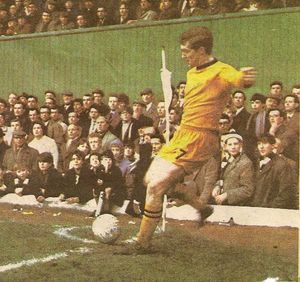
Having been given his chance by Cullis, Terry kept his place for the rest of the season and early in the following season found himself being championed for an England cap. It all came about when Wolves made a wonder start to the 1962-3 season. An 8-1 opening day win over Manchester City started an 11-game unbeaten run as a Wolves side with the accent on youth made the football world sit up.
Such was their success that at least one national newspaper called for England to field the Wolves forward line – with the exception of Spurs’ Jimmy Greaves at inside-left rather than Jimmy Murray, in the game against France at Hillsborough, the first leg of the European Nations Cup tie. The forerunner of the European Championship, the competition was run on a knockout basis with each tie decided by the aggregate score over two legs. England boss Walter Winterbottom had announced his resignation and his successor had not yet been appointed so the side were still chosen by an FA selection committee.
The bold move of choosing the bulk of the in-form Wolves attack was not for them. Terry did not get a cap and neither did centre-forward Ted Farmer - new caps were handed to Birmingham City’s Mike Hellawell on the wing and Blackpool striker Ray Charnley. At least there were caps for Terry’s team-mates Chris Crowe and Alan Hinton, joining long-serving Ron Flowers in the national side. The new-look team did not gel and England were disappointing in a 1-1 draw, their equaliser coming from a Flowers penalty. The second leg was lost 5-2.
That was the closest Terry got to national recognition. Wolves’ wonder start was followed by seven games without a win, he sustained an injury and when Alf Ramsey was appointed England boss, another Terry soon became his preferred choice on the right wing - Terry Paine of Southampton. Ramsey would eventually decide that old-fashioned wingers were not a necessity. Meanwhile, Terry would return to the Wolves side in some style. As Ted Farmer had sustained a lengthy injury, Barry Stobart was now leading the attack and he, Terry and Alan Hinton had a day to remember when Albion came to Molineux on Saturday, March 16, 1963.
The sides had met on Boxing Day but a snow storm saw the game abandoned at half-time with Wolves 2-0 up. The re-run also saw Wolves two ahead by half-time, thanks to goals by Stobart, but this time there was no reprieve for the visitors. When Terry and Alan Hinton also collected two goals each, three men had the chance of a hat-trick and it was Terry who had the honour with a goal in the last minute. This was the third time a Wolves player had scored three goals in a game against Albion and, by coincidence, each time it had been the man wearing the number seven, Terry Wharton following in the footsteps of Johnny Hancocks (1950) and Micky Lill (1959). The only Wolves player to have done so since was Iwan Roberts at The Hawthorns in September 1996.
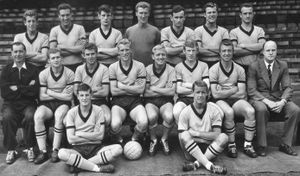
It was, and remains, the biggest ever Wolves win over their old rivals but did Terry get the match ball as a souvenir? No - he got nothing of the sort. What he did get was an unexpected call into Stan Cullis’s office the following Monday. Usually, a call into the manager’s inner sanctum meant a rollicking but Terry thought that just for once he might be summoned to receive some praise. Alas, no. “Two of your goals were tap-ins - I could have scored them,” said Cullis.
Wharton looked back on his career with great affection. “It flew by really and you don’t really appreciate it at the time. It’s when you look back. I was looking through the names of the England 1966 World Cup squad the other day and realised I played against every one of them.” The revival in fortunes in 1962-3 was a false dawn for Wolves. They struggled the following season and 1964-5 brought the unthinkable - the sack for Cullis and relegation.
Terry was a virtual first choice through all the upheavals and played a major role in getting Wolves back into the top flight under manager Ronnie Allen. That promotion season – 1966-7 - saw Wolves make a slow start, winning only once in their opening five games. Terry missed the first four of them through injury but his return seemed to revitalise the team. He was back in time to write his name into the club’s history books as scorer of their first goal in the League Cup competition in a 2-1 defeat of Mansfield Town. Wolves, along with a few other big clubs, had shunned the competition in its early seasons. A week after the Mansfield win came the game which really ignited Wolves’ promotion push and saw Terry register his second hat-trick for the club - a 7-1 home win over Cardiff City on Wednesday, September 21, 1966.
Two of his goals came from the penalty spot and cool calm penalty-taking was a feature of Terry’s game. Writing about the two spot-kicks in the Express & Star, long-serving Wolves correspondent Phil Morgan commented: “He showed a touch of class by choosing different scoring angles”. Terry does not remember his approach to the two kicks but recalls his outfield strike: “The other goal was a 25-yard drive”. His reward for his three goals on this occasion was the match ball but, sadly, he no longer knows where it is, “what with moving house and one thing and another.”
There were three more penalties for Terry that season as he contributed 13 goals to the team’s 88 as they finished runners-up to Coventry City. The trip to the United States which followed was a memorable one for Terry and his team-mates on and off the field but it brought the only blot on his spot-kick record. He missed a penalty in the final of the United Soccer Association tournament as Wolves beat Aberdeen 7-6. The miss meant a prolonging of the epic encounter. If he had scored Wolves would have been 7-5 up with extra-time a minute to run. As it was, there was still enough time left for Aberdeen to mount one last-ditch attack which saw them win a penalty and future Wolves man Frank Munro complete a hat-trick which made it 6-6 and sent the game into “sudden death” extra-time. That meant the next team to score would be winners and an Ally Shewan own-goal gave Wolves victory.
Like a few other players, Terry found that a lapse in form could prompt a section of the Wolves crowd to give a player some stick, rather than encouragement. So when that happened to Terry and Bolton were interested in signing him he decided the time had come to leave. By coincidence Wolves had earlier been trying to sign Bolton’s promising right winger Francis Lee but finally lost out to Manchester City. Lee’s City debut was in a 2-0 home win over Wolves and soon afterwards Terry said his farewells to Molineux after a 10-year stay. “It cost them £60,000 when they signed me and the chief scout George Taylor was still there. He must have seen me playing for Bolton schoolboys but they never came in for me. I thought when I joined them, ‘You could have had me for £10.’”
Terry had 19 games for Bolton before the close of the 1967-8 season and then two full seasons which saw him score steadily in a struggling side. By the time the 1970-1 season began, legendary former England centre-forward Nat Lofthouse had taken over from Bill Ridding as manager and must have hoped he might revive the club’s fortunes when they got off to a flying start. Terry hit a hat-trick as Luton Town were beaten 4-2 at Burnden Park, Bolton’s ground in those days, and was surprised afterwards to get a visit from a Luton director listed in the Rothman’s Football Yearbook as “J E Bartholomew”.
That gentleman was better known by his stage name – Eric Morecambe, the much-loved comedian. “Yes he came into our dressing room and congratulated me. I couldn’t believe it. It was a lovely memory,” says Terry, who adds with a smile: “I was the league’s top scorer for a couple of days.” Alas, the season would prove no laughing matter for Bolton. They finished bottom and were relegated to the Third Division. By then, Terry had made a surprise return to the top flight when Crystal Palace signed him. His first game for the Londoners just happened to be against Wolves at Molineux and it proved a painful memory. “I finished up with four stitches in my ankle. Derek (Parkin) did me and I still remind him about it when I see him. He always says, ‘I didn’t go over the top, Terry’ and I say, ‘I know you didn’t’. He was a good player, Derek, you didn’t get much change out of him.” Like all wing men, Terry had full-backs he loved playing against and those he did not relish facing. “You have your rabbits - John Compton of Ipswich. I could always skin him and Ron Henry of Spurs, I used to love playing against him. I never got much out of Tony Dunne of Manchester United.”
Terry played in Palace’s four Anglo-Italian Cup games against Cagliari and Inter Milan in the summer of 1971. “We played Inter in the San Siro, beat them 2-1 and I got man of the match.” Terry began the next season still first choice for the number-seven shirt but lost his place as Palace won their opening game then lost five of the next six. Playing for the reserves, he sustained an injury against Spurs after being tackled by a young Graeme Souness. It kept him side-lined for many weeks.
By the time he was fit again, he found that manager Bert Head could still not find a place for him, having brought in several new players, among them John Craven from Blackpool and Willie Wallace from Celtic. So Terry was out of the squad and “in the shop window”. One or two English clubs showed an interest but it was an offer to play in South Africa that tempted him most. Former England striker Johnny Byrne was managing Durban City and Terry agreed to sign for him. “The manager just said, ‘Budgie Byrne’s here, do you fancy going to South Africa?’ Well my missus was born in Cape Town, though she came back here when she was three. I thought it would be nice, a bit of sun as well, so I said yes.” Former England captain Johnny Haynes was also with Durban City and Terry enjoyed playing in the same team. “He was a brilliant player, was John.”
Returning from Durban, Terry linked up with old boss Ronnie Allen who was managing Walsall. It was a brief reunion. Terry played in a league win over Shrewsbury in December 1973 but when the Saddlers were a week later knocked out of the FA Cup by Plymouth, Allen was sacked. Former Albion defender Doug Fraser, who was playing at right-back for Walsall by then, was named as manager and wanted Terry to be his assistant.
However, the wage offer was £28 a fortnight – not surprisingly Terry accepted an offer to return to South Africa. During his brief stay at Walsall, Terry linked up again with former Gornal striker George Andrews. “I used to pick George up and give him a lift. He didn’t drive.” A topic of conversation on their journeys may well have been the time Wolves beat Cardiff 7-1 - it was Andrews who scored the Welsh side’s goal that night.
In affectionate memory of Terry Wharton, Steve and Clive share a few personal recollections.
Steve adds his memories of the Albion game: Steve Gordos watched the game: “My dad had two season tickets in the Waterloo Road stand but he would often take a pal. So I watched from the Waterloo Road enclosure. Normally, I would have been playing rugby for my school on a Saturday afternoon but this was the winter of the ‘Big Freeze’ and our school pitches were frozen solid and unplayable for weeks. That’s why I got a chance to see the ‘replay’ of the Boxing Day game that was stopped at half-time. I was at that first game and in the enclosure for that one, too. It was cold and snowing and none of us was surprised when the ref abandoned it.
“Being able to go to the re-scheduled match was a real bonus. In my last few weeks at school, I went with a couple of pals. It was good being in the enclosure on a day when Molineux was less than half full. The crowd was not hemmed in tightly and we were able to edge nearer to the South Bank in the second half and got a great view of the five second-half goals. It was a great day for Terry Wharton and Noddy Hinton. Both of them packed a dynamic shot and the Baggies just had no answer to them. They both deserved a hat-trick.”
Clive recalls Terry’s part in other games: “My first visit to Molineux was in March 1965, around six months after the sacking of Stan Cullis. From a seat in the Molineux Street stand below the old clock, I saw a 3-1 victory over Stoke City. Terry netted ten minutes from the end to restore Wolves’ two-goal advantage. A year later Wolves welcomed Manchester United for a fifth round FA Cup tie. A potentially glorious cup run was ended by the star-studded Red Devils, but on this occasion a round earlier. Amidst wild excitement Terry put Wolves two up within ten minutes with two penalties but Law (2), Best and David Herd eventually brought the Molineux masses back to their senses. As the Wanderer wrote: “It was a fine effort while it lasted, but, alas, our F.A. Cup hopes for this season ended at the same obstacle as last year, the redoubtable Manchester United.” Eleven months later, on 18 February 1967 Wolves welcomed cup holders Everton to Molineux for a fourth-round FA Cup match. Once again it was Terry Wharton who put Wolves ahead only for Alan Ball to net a late penalty to set up a Goodison Park replay. Three days later the return match was something of a personal nightmare for Fred Davies and was lost by three goals to another from Wharton.”
In more recent years Terry and Sue were faithful supporters of Daventry Wolves (the DDCWWFCSC), regularly attending the club’s summer barbeques and annual dinners. The last time that we saw Terry was on November 10, 2023 when the LA Wolves documentary was given its first airing at the Arena Theatre in Wolverhampton. Thanks for the memories Terry and may we offer our condolences to Sue and the family.