Task and finish group to be set up in bid to sort out pothole epidemic in Shropshire
A task and finish group is to be set up to try and sort out the pothole epidemic in Shropshire.
Councillor Ed Potter, chairman of the economy and enviromment overview & scrutiny committee, said there will be several sessions that will look at quality assurances, whether to fix one or three potholes at a time, and how to work with partners and different contractors.
Get the latest headlines delivered straight to your inbox with the Shropshire Star’s free newsletter

A report will be brought back to committee, who will then make recommendations to Cabinet before Shropshire Council shapes a tender process for a new highways contract.
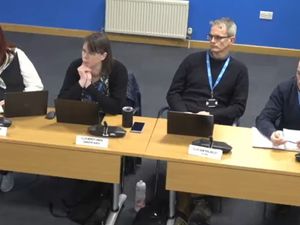
It comes after Andy Wilde, service director for infrastructure, spent over an hour answering committee members’ questions on Thursday (March 12).
He explained that January was a particularly challenging month, with lots of road defects appearing.
“Prior to Christmas, we didn’t see those defects rise much – it was pretty steady,” said Mr Wilde.
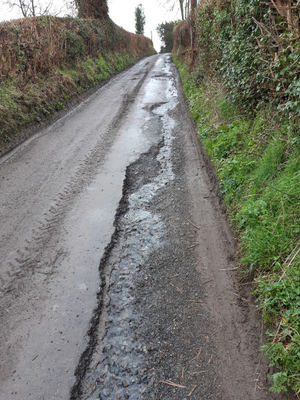
“And then in January, we saw an extremely sharp rise in the number of defect numbers on the back of a cold perior followed by three, four weeks of very wet weather. So, what that has given us is, all our pothole numbers that we would generally get through the winter, all in the space of a very short window.
“We then have to try and re-deploy resources to try and contend with that, which is why we’ve got a backlog that we’re trying to work our way through.
“We’ve had additional gangs on the network to try and get those potholes repaired as quickly as we can, and we’re averaging 800 to 900 repairs per week. And as we get into spring, our programmes of work will start to kick in, which will see more repair work.
“But ultimately, our focus is how do we get more investment into the network? How do we get more money into preventative maintenance? Because that, over time, will reduce the amount of money we are spending on reactive [measures], which is disproportionate.”
Mr Wilde was told that blocked drains can contribute towards defects, as well as vehicles now being much larger.
“Farming activity has changed, and when do we have heavy rain, that is then contributing huge quantities of water sediment and other things onto the network, which is presenting us with a range of different challenges,” said Mr Wilde.
“The conversations we want to start having at parish level is about how do we address some of those problems, given that they’re not necessarily easy ones to solve? But, if we can work collaboratively with landowners and parish councils to at least understand that, then I think there is an opportunity for us to be enablers in that space whereby we provide expertise and help, and come up with a strategy.”
Meanwhile, Councillor Donna Edmunds (Hodnet) asked if any post-repair inspections happened, explaining that residents had reported “jobs left half done”, or “repairs were carried out but not to very high standards”.
In response, Mr Wilde said inspectors go out and look at repairs that have been done, adding that if there are quality issues, it is fed back to the system.
“All of these repairs are photographed before and after, and the team are evaluating that every week,” said Mr Wilde.
Looking at what can be to help help the authority, Councillor Brendan Mallon mentioned the “Project Amber” initiative that Blackpool Council set up where advanced imagery and analysis technology is used to show what roads need repairing.
However, Mr Wilde said that, while it’s a “very sensible model”, Blackpool has a highly urbanised road network.
“They won’t have the rural ditching and the rural challenges that we have,” he said.