HS2 timeline setback confirmed as original goal dates 'cannot be achieved', bosses warn
HS2 has confirmed that its aim to get trains running between Birmingham and London between 2029 and 2033 "cannot be achieved".
Birmingham’s Curzon Street Station is currently taking shape in the heart of the city but the divisive high-speed railway project has been plagued by serious challenges.
Earlier this year, HS2 CEO Mark Wild acknowledged that construction had been ‘harder than thought’ and ‘needed a reset’ involving a review of the project’s cost and schedule.
In an end-of-year update, HS2 insisted that significant progress had been made throughout 2025 with the project now at an “advanced stage of a comprehensive reset”.
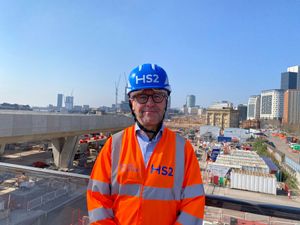
But it went on to say that Mr Wild had “provided advice” to the Government confirming that the railway’s 2029/2033 opening schedule could not be achieved.
“HS2 Ltd has since been finalising a new range of credible cost and schedule estimates,” a statement read.
In this latest update, Mr Wild said he made a commitment to address “the failures of the past and get HS2 on track”.
“It’s clear that we can only do so with a fundamental reset,” he continued.

“Over the last year we’ve been through the programme with a fine-tooth comb and we’re now very close to establishing a clear path forward.
“However, we’ve not stood still. We had to deliver a safe and productive year while HS2 was reset and I want to thank the 34,000 people working on the project every day for their tremendous hard work.
“The solid progress they’ve made in the last year gives us strong foundations to build upon.”
He added: “We’ve shown what can be done and I expect that to continue throughout 2026 and beyond as we deliver HS2 as safely and efficiently as possible and for the lowest reasonable cost.”
A number of changes have been made already as part of the reset, including ‘toughening up’ cost controls; strengthening the leadership team and reshaping HS2 into a ‘less bureaucratic organisation’.
It has also established a new construction schedule to prioritise completing the initial phase of the railway between Old Oak Common in London and Birmingham.
Speaking to the Local Democracy Reporting Service (LDRS) earlier this year about why a ‘reset’ was needed, Mr Wild said: “This is of a scale never done before – the last mainline terminus we built was 1899 in Marylebone.
“Truth is also the construction has been harder than we would have thought so we’ve lost ground in construction.
“So a combination of factors of getting a little bit behind and also the complexity to come means we need to reset the programme.”
“The good news is that this is all completely solvable and I’m very, very confident,” he went on to say. “But you get one chance to reset it to give people confidence.”
Asked at the time whether the aim was for trains to run between 2029 and 2033, Mr Wild responded: “There is fantastic work going on here, you just need to look at the amazing engineering work, the quality of the people, the commitment.
“We’re so far into the civil engineering now, it’s time to reset – as frustrating as it is, that will take me the rest of this year to do.
“Standing here, I don’t really have an answer – I’m just going to do the work.
“I hope people are patient – it’s the only time we’ll do it [a programme reset] from now until the end of the job.”
‘Peak production’
In its latest update, HS2 said it was at “peak production”, with all 23 miles of deep-bore tunnels having now been excavated on the opening section of the railway between Old Oak Common and Birmingham Curzon Street.
“Figures show 70 percent of the project’s vast earthworks programme has now been delivered,” it continued. “Almost 300,000 tonnes of steel has been used – 69 per cent of that required for the railway.
“HS2 is now focused on completing the complex civil engineering programme across the 140-mile route, ahead of the next vital stage when the track, signalling and communications systems are installed.”
HS2 also said it has increased the number of staff in front-line construction roles to help “drive productivity” and that construction partners exceeded many targets set for them this year.
It went on to say there were a number of construction achievements this year, including:
The installation of the very first high-speed platforms at Old Oak Common superhub station.
A record first as engineers slid a huge 14,500-tonne box structure into position under the A46 Kenilworth Bypass.
Completion of the project’s biggest natural river realignment, with a 749-metre section of the River Cole near Coleshill being realigned to make way for new viaducts and embankments.
Successful excavation of two twin-bore tunnels – the 8.4-mile Northolt Tunnel in London and the 3.5-mile Bromford Tunnel in the West Midlands
Completion of the 2.1-mile-long Colne Valley viaduct.
HS2 also said that back in June, the Government’s spending review confirmed funding of £25.3bn to deliver HS2 between London Euston and the West Midlands over the next four years.
“This provides greater certainty to the project’s delivery, with a clear focus on completing all tunnels, viaducts, embankments and cuttings along the route of the railway,” it said.