Toyota has demonstrated its latest very impressive self-driving cars
Take a look at the car in various hazardous scenarios.
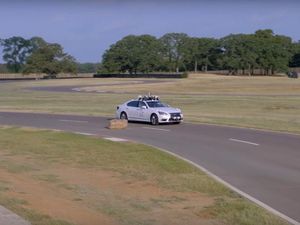
Everyone from the traditional motoring companies to the likes of Apple and Google is working on driverless cars, and huge strides have been made in a short amount of time.
The Toyota Institute of Research (TIR) just demonstrated what its latest vehicles, known as Platform 2.1, are capable of – with some pretty impressive results.
Here’s the latest look at its Chauffeur and Guardian autonomous vehicle platform.
TIR showed the modified Lexus LS 600hL test vehicle dealing with the “randomness” of everyday life in Chauffeur mode by changing lanes to avoid hay bales dropped in its path.
As well as random obstacles, the car, which uses LIDAR laser sensors built by start-up Luminar to sense what’s going on inside and outside, can also react to problems caused by other drivers.
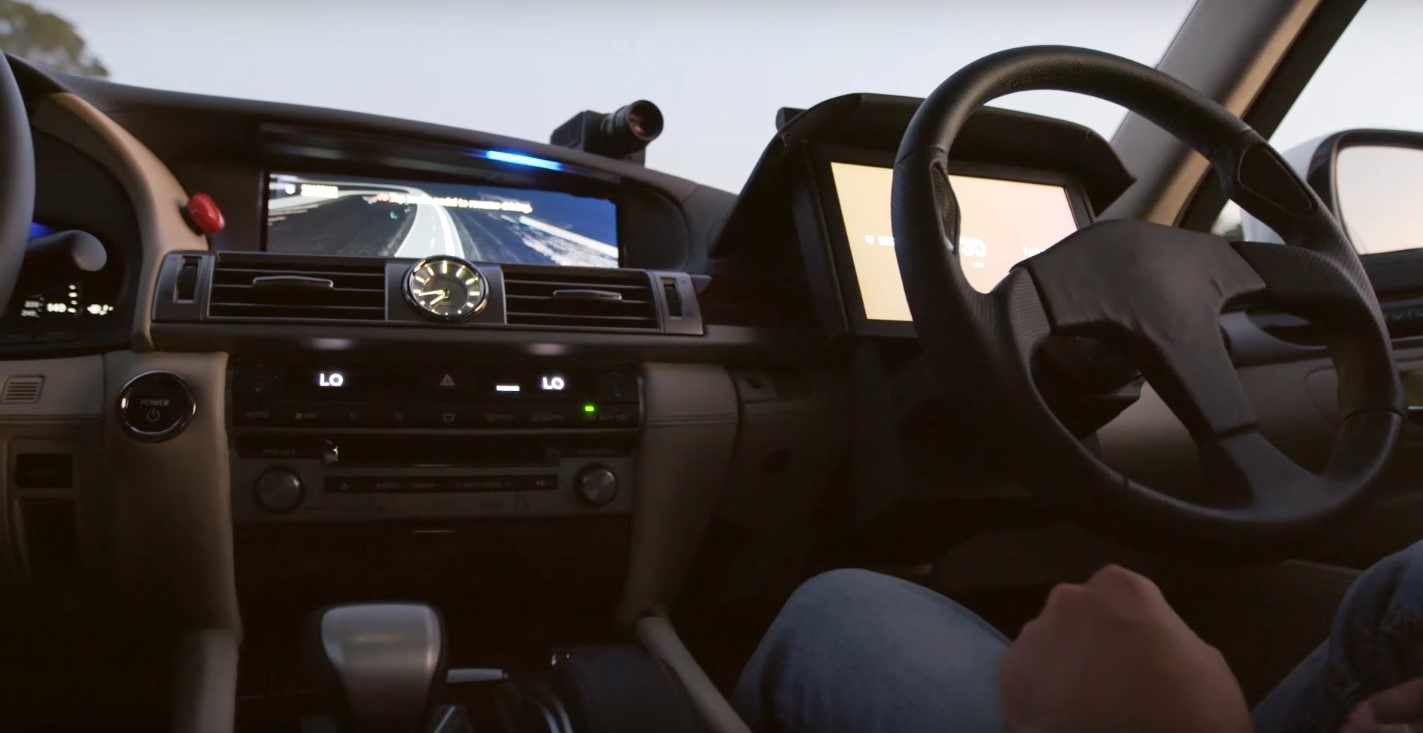
Guardian also uses an infrared sensor mounted on the steering column to keep an eye on driver behaviour. If any signs of drowsiness or distraction are detected the programme will immediately take over, and give the option for the driver to take back control in due time.
The specially-designed test car shown in the video was made so both modes could be tested safely at once – with the extra steering wheel allowing a safety driver to sit alongside an actual test driver for the demonstration.
With Toyota being the world’s largest automaker, this could be an insightful peak into the future of driverless cars.