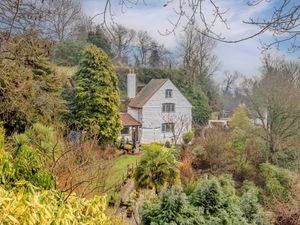
Plans lodged for outbuilding near historic Shropshire church that was destroyed by Welsh invaders then rebuilt
An outbuilding near a historic Shropshire church could be converted to provide ancilliary accommodation.
Andy and Emma Bennett have submitted plans for the Old Rectory in Church Pulverbatch, near Shrewsbury. Historic reports show that the first known priest was recorded in 1193, but the original church was destroyed by Welsh raiders around 1400.
The church was subsequently rebuilt and restored in 1773. The present Church of St Edith was rebuilt in 1853, although the West Tower dates back to 1773.
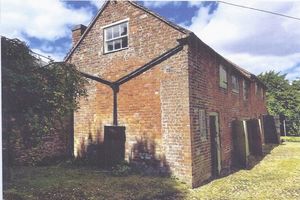
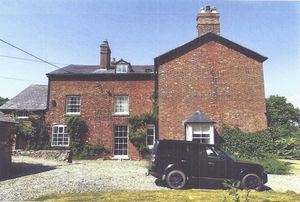
The Reverend William Gilpin was the rector at St Edith’s for 42 years and the present ‘Old Rectory’ was reportedly built to accommodate his large family in 1806. It is understood that the outbuilding subject of the application was built around the same time.
“The proposed internal layout has been designed in such a way as to minimise the internal works,” said Tony Rowland, of Tony Rowland Architectural Services.
“The best way to achieve this was to divide the conversion into two ancillary units. The only works which are being proposed on the ground floor is the insertion of a new dividing wall between the kitchen/dining area and the staircase. A new door opening is also being proposed between the entrance hall and the sitting room.
“It is proposed to insert a new staircase within the entrance hall of the two storey unit which will provide access to the first floor, whisle the existing staircase configuration within the upper range would be retained to provide access to the first floor unit.
“Externally, the configuration of door and window openings has been retained, with the exception of the reinstatement of the window in the place of the later inserted garage door.”