Extension of quarry near Bridgnorth recommended for approval
A quarry near Bridgnorth is set to be extended.
Salop Sand and Gravel Company Limited wants the work to take place at Morville Quarry, with 2.7 million tonnes of sand and gravel being released over a 20-year period, with an additional two years to complete the restoration.
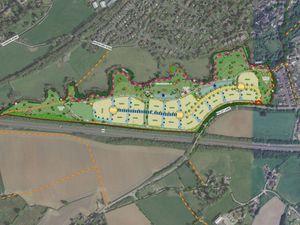
The development consists of 35.5 hectares (the equivalent of almost 50 football pitches). This includes the existing Morville Quarry (10.68ha), the northern extension (12.81ha), the southern extension (8ha) and the Bridgwalton Quarry access road, plant site, and associated lagoons.
The scheme will be discussed by Shropshire Council’s Southern Planning Committee on Tuesday (July 22) with it being recommended for approval.
The timescale for the work is proposed as following:
Years one to 11: Mineral extraction at a rate of 250,000 tonnes per annum.
Years one to two: Extracted mineral to be processed at Bridgwalton Quarry, adjacent to the southeast and also owned by the applicant. After this, it will take place at Morville Quarry’s new wash plant.
Years six to 20: Restoration of northern extension area back to original ground levels, with 940,000 tonnes of inert material imported for this. Restoration of southern area extension to mix of wildlife pond, reedbeds, species rich wildlife grassland and hedgerow, native woodland and tree planting.
Years 21 to 22: Restoration of plant site back to original ground levels, with 670,000 tonnes of inert material imported for this.
Years three to 21: Recycling of 212,500 tonnes of imported material to produce 170,000 tonnes per annum of recycled aggregate for sale. Silt waste of 42,500 tonnes per annum to be used in infilling operations for the northern extension area.
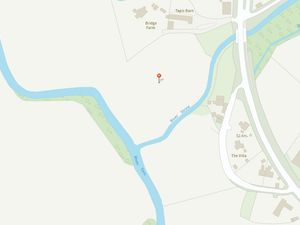
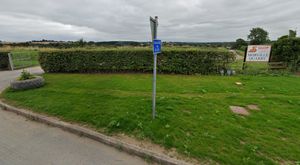
A gated crossing would be used over Hangmans Lane for access between the existing Morville Quarry and northern extension area.
Temporary traffic lights would operate during working hours, only turning red when a vehicle needs to cross the two parts of the quarry. Peak movements are estimated at eight dump truck crossings per hour. The existing access from Morville Quarry onto Hangmans Lane, which leads to Telgraph Lane, is proposed to be retained, as well as the existing infrasturcture.
Benefits of the scheme put forward by the applicant include:
Contributing significantly to Shropshire Council’s identified requirement of 2.97 million tonnes of windfall mineral across the next Local Plan period.
Tasley Gateway and Tasley Garden Village development sites are in close proximity to Morville Quarry and therefore its extension is well-suited to providing mineral and managing inert waste for these sites.
It would provide significant waste capacity for Shropshire over the lifetime of the development. Shropshire Council cannot currently demonstrate sufficient landfill void capacity.
It would support direct employment of 15 staff. The development is calculated to support up to 52 jobs through direct, indirect and induced effects (hauliers, maintenance, goods and service).
The quarry is a significant contributor to the local economy. The company pays considerable rates to Shropshire Council.
The restoration scheme would provide 24.73 per cent biodiversity net gain over a diverse habitat mix of agricultural land, species rich grassland/hedgerow and waterbodies/reedbeds.
“The proposed extension of Morville Quarry is an important development in the sustainable extraction of essential mineral resources in Shropshire,” said planning officer Lynn Parker.
“Morville Quarry has been a significant contributor to the Shropshire economy since 1958, ensuring a stable supply of sand and gravel crucial for regional infrastructure and housing projects.
“The continuity of operations at the quarry, through the proposed extensions into adjacent land parcels, aligns with both national and local policies aimed at sustaining materials supply and supporting economic growth.”