Reform claims Bridgnorth Town Council 'doesn't reflect the will of the people' after members got 0 votes in co-option
Reform UK has criticised the way in which new councillors were chosen to represent Bridgnorth.
Due to not enough candidates being put forward for any of of the four wards at the local elections in May, a co-option process was carried out to fill five remaining vacancies.
Bridgnorth Town Council says the vacancies were advertised requesting that candidates provide a short statement explaining why they wanted to become a town councillor. Anyone eligible was then invited to provide a three-minute presentation at a town council meeting.
The process was carried out on a ward-by-ward majority basis by a show of hands.
Clifford Basset and Christian Lea were voted to serve Morfe Ward, with Adam Tonks (West Ward), Barrington Berry (East Ward) and Daniel Quinton-Jones (Castle Ward) also successful.
However, in an open letter to the town council, the Shropshire Reform UK councillors say the process “raised serious concerns about fairness and representation”.
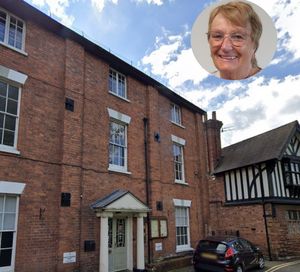
They argue that Susan Eden comfortably won the Bridgnorth East division in the Shropshire Council elections, while fellow Reform UK candidate Stuart Greaves only lost Bridgnorth West & Tasley by one vote.
Both put their names forward for the Bridgnorth Town Council vacancies, but neither received any votes.
“The five available seats were to be filled by votes cast by 10 sitting councillors – none of whom are affiliated with or supporters of Reform UK,” reads the letter, signed by 'Reform UK Councillors, Shropshire Council'.
“Among these voters were the outgoing mayor, the incoming mayor, the mayoress, and the deputy mayor.
“The co-option process itself is intended to fill vacancies on the council when elections are not held. According to guidance from the National Association of Local Councils (NALC), councillors involved in co-option should seek to diversify the council by selecting individuals with differing skills, backgrounds, and perspectives.
“This ensures the council reflects the community it serves. The Code of Conduct further emphasises that councillors must represent the interests of the entire electorate, not just their own supporters, and must avoid any form of predetermination in voting.
“The outcome – where neither received a single vote – raises serious questions. Whether this was a case of predetermination cannot be proven, but the optics are troubling.
“It appears that unsuccessful candidates were co-opted while those with a clear public mandate were excluded.
“We believe this undermines the democratic principles that should guide Bridgnorth Town Council. The current makeup of the council does not reflect the will of the people, and the voting members failed to uphold the standards expected of them under NALC guidance and their own Code of Conduct.”
In response, Bridgnorth Town Council said it considered the co-option process “was undertaken in a fair and transparent way”.
“Bridgnorth Town Council doesn’t have party political groupings,” said the town mayor, Councillor David Cooper.
“We try and work together as a team to deliver services for the people of Bridgnorth. It’s a demanding role that require people to give up their time for the benefit of the community.”