Eight Canadian airmen killed in the Elan Valley 80 years ago to be remembered with unveiling of new memorial
A memorial plaque is to be unveiled to the memory of eight brave young men of the Royal Canadian Air Force, who came to Wales in 1944, prepared to lay down their lives in defence of our freedom.
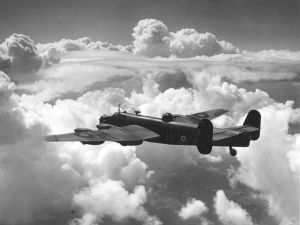
They paid the ultimate price when their aircraft, Handley Page Halifax LL541, crashed into Penyblwch mountain above the Elan Valley on December 12th, 1944.
The eight young Canadians on board were all killed.
They were buried with full military honours at Blacon Commonwealth War Cemetery, Chester, where their graves can be seen today.
A special dedication service will mark the unveiling of the memorial at the Elan Valley Visitor Centre in Elan Village on Friday, October 10 at 6.30pm. All are welcome to attend.
The unveiling of the plaque will be performed by two eyewitnesses to the events of that day, Mrs Betty Davies and Mr Kenneth Godfrey.
Both saw Halifax LL541 in its final moments and both have never forgotten that image or the men who perished.
They are the only two surviving witnesses to the crash and the events afterwards, both being close enough to see the plane breaking up before it hit the mountain.
Organisers hope Clive Bywater of Rhayader might also take along his box of aircraft parts, including the navigator's wristwatch, which he found on the hill when he was a teenager. The watch is going to go back to the navigator's family in Vancouver.
Paul Sambrook at Trysor Heritage, who has been working on the memorial and contacting the families over the last year or so, said; “The crew of Halifax LL541 gave their tomorrows for our todays. With this service and this memorial, we express our enduring gratitude to them, and their country, for their role in protecting the Commonwealth.
“We hope that the memorial will keep alive the names and the story of the crewmen of Halifax LL541 for generations to come.
“The designer of the memorial panel, Alan Williams is coming up from the Gwendraeth Valley to be at the event and the Vice Lord Lieutenant of Powys, Mr Tony Evans is attending.
“Sadly the Canadian High Commission representative has been called to meetings in Ottawa so won't be able to join us... but the Canadians are sending a wreath to be laid.
“The Llandrindod Wells Air Cadets will also be there as will representatives of the Royal British Legion.”
The event is possible thanks to the generous support of Dwr Cymru through the manager and staff of the Elan Valley Visitor Centre.
They will display the Halifax Ll541 Memorial Plaque in a prominent position inside the Visitor Centre, ensuring that hundreds of thousands of visitors annually will learn of the sacrifice of the crew.
Before the commencement of the act of worship, visitors will form up under the direction of the Parade Marshal, the invited guests will take their places, the Standards will be marched on and the Vice Lord Lieutenant of Powys, Mr Tony Evans DL, The Worshipful, the Mayor of Rhayader, Mr and Mrs Ken Godfrey, Mrs Betty Davies and the Chaplain and clergy will process to their places around the memorial.
During the service two hymns will be sung, the exhortation will be said and the Last Post and Reveille will be played. There will be a wreath laying ceremony and the Kohima Epitaph will be recited by Chaplain Charles Lewis.
The British National Anthem, the Canadian National Anthem and the Welsh National Anthem will then be sung.
Professional archaeologists at Trysor Heritage are familiar with the Elenydd uplands and the crash site was one of the sites they researched during a field survey of the area in 2022 for the Elan Links Project, funded by the National Lottery Heritage Fund.
But they were contacted last year by the family of a gentleman who witnessed the crash when he was an evacuee child in the Elan Valley.
He remembers the event to this day and wanted to know if Trysor had seen the crash site and if there was any memorial to the crew.
Mr Sambrook said this contact led to us talking to both David James and Clive Bywater of Rhayader.
As a result a small party to laid a wreath at the remote crash site to mark the 80th anniversary of the crash in December 2024 and they held a memorial service in St Clement’s Church.
Since then relatives of all eight crewmen have been tracked down and contacted and this new memorial has been created.
Around 1pm on the afternoon of December 12, 1944, the people of Rhayader and district were surprised by the sight of a Handley Page Halifax bomber emerging from the clouds above the town clearly in distress.
The airplane was struggling to gain altitude and parts were falling off as it passed over the town.
A short while later, at 1.03pm, the airplane crashed into the mountains at Penybwlch, to the west of Rhayader, witnessed by many residents of Rhayader and the surrounding district.
The plane in question was the Royal Canadian Air Force Halifax bomber LL541. It was flying a daytime training mission from its base at RAF Dishforth, Yorkshire. Its objective was to fly out to Cardigan Bay and then return to RAF Dishforth.
On that fateful flight LL541 had its seven regular crew members, plus an extra flight engineer.
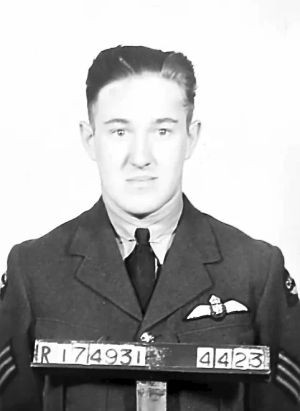
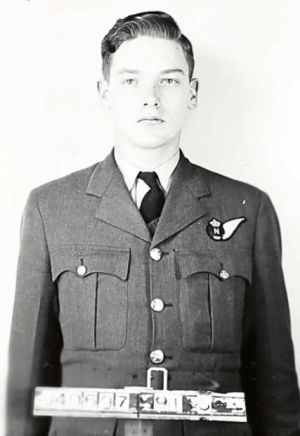
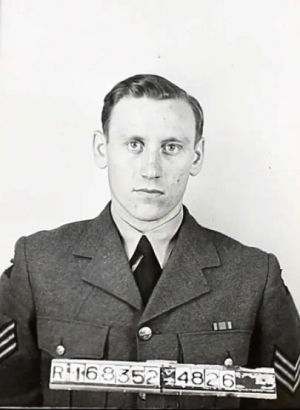
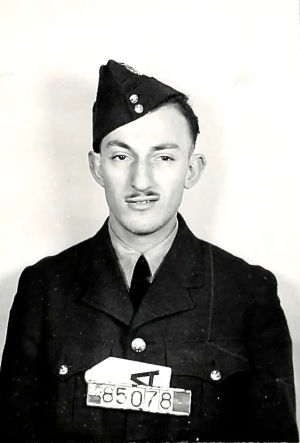
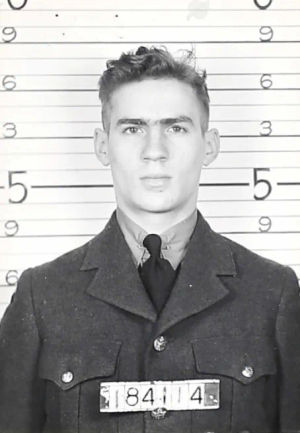
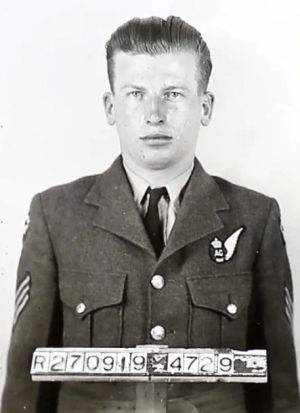
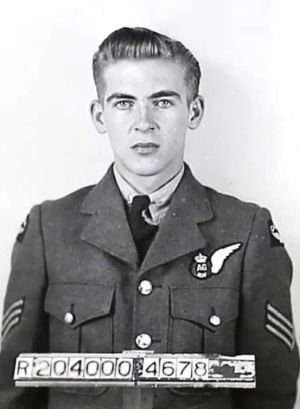
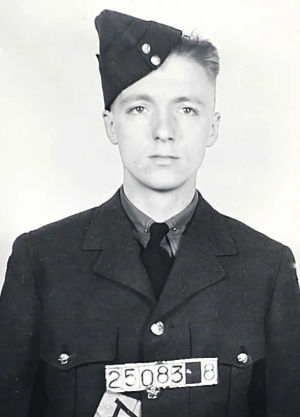
All eight men were Canadians serving in the RCAF, namely; Pilot Officer Gerald Lister (Pilot), aged 22, Flying Officer Ernest Brautigam (Navigator), aged 19, Flight Sergeant David Levine (Bomb Aimer), aged 23, Sergeant John Overland (Air Gunner), aged 19, Sergeant Grant Goehring (Air Gunner), aged 21, Flight Sergeant James Preece (Wireless Operator/Air Gunner), aged 20, Sergeant Frank Willmek (Flight Engineer), aged 23 and Sergeant Allan McMurtry (Flight Engineer), aged 22.
F/Sgt McMurtry may have been the extra crew member flying with the crew of LL541 that day. In a letter from F/Sgt Goehring’s father to the authorities enquiring after the families of his son’s crewmates, all are mentioned apart from McMurtry suggesting he was not a regular crew member.
It is not known why Halifax LL541 lost control and crashed. It was suggested that the pilot may have suffered from oxygen deprivation and passed out, putting the plane into a dive which stressed the aircraft’s frame. He may have come around and tried to regain control but failed to clear the ridge to the west of Rhayader.
The aircraft came down heavily on the south side of Penybwlch, killing all on board. Three of the crew had managed to bail out before impact, but at an altitude too low for them to open their parachutes. They too perished.
During the following week the wreckage of the aircraft was removed from the hill. The crew were buried with full military honours at Blacon Cemetery, Chester, which had been designated as a Regional Cemetery for the Royal Air Force in 1943.
They lie alongside almost 400 other air crew who died on missions or exercises over western Britain during the war, half of which are their fellow Canadians.
The cemetery is now a Commonwealth War Cemetery maintained by the Commonwealth War Graves Commission.