New European CO2 limit risks ‘invasion of fake electric vehicles’, warns green group
New European CO2 limit risks ‘invasion of fake electric vehicles’, warns green group
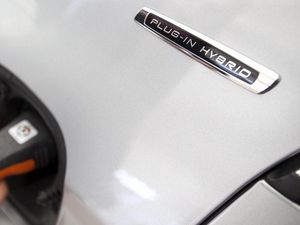
Fresh European CO2 limits may be opening the door for an ‘invasion of fake electric vehicles’, an environmental campaign group has warned.
Last week, EU leaders agreed on plans that would see CO2 emissions in new cars cut by over a third by 2030, which includes incentives for manufacturers to sell more electrified cars.
The pressure group Transport & Environment has expressed concerns that loopholes in new regulations will result in manufacturers pushing plug-in hybrid vehicles (PHEVs) over full electric vehicles (EVs) in order to benefit from these bonuses. The group says PHEVs tend to be large SUVs with high-emitting petrol engines that feature rarely-charged, small capacity battery packs — making them no more environmentally friendly than petrol or diesel equivalents.
Julia Poliscanova, clean vehicles manager for Transport & Environment, said: “Europe’s CO2 limits for cars could be a breakthrough for e-mobility, but regulators still have a lot of work to do. National governments should limit incentives to zero-emission and long-range plug-in hybrid cars only. Otherwise, carmakers may go down the road of least resistance and comply with fake ‘electric’ cars that never get charged and spew out as much CO2 as SUVs.”
However, speaking to The Independent, Mike Hawes, chief executive of the Society of Motor Manufacturers and Traders, described this suggestion as “utter nonsense”.
He added: “Manufacturers are challenged – both by regulation and consumer expectation – to drive down carbon emissions. There are a variety of technologies that can help achieve this, including efficient petrol and diesel engines, hybrids, plug-in hybrids, battery electric and even hydrogen vehicles.
“The choice is there to enable motorists to consider the best technology for their driving needs and the industry will continue to play its role in helping address climate change and air quality concerns.”