Shrewsbury hospital surgeon accepts causing fatal colon tear during operation on gastric bypass patient
A surgeon has accepted causing a fatal colon tear when he was undertaking diagnostic surgery on a gastric bypass patient.
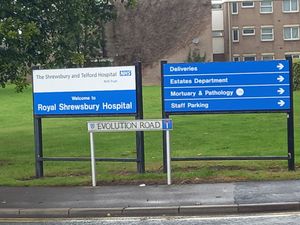
Yvonne Tolley died at Royal Shrewsbury Hospital the day before her 64th birthday on February 4 last year.
Family described how Mrs Tolley was “curled in the foetal position, clutching her abdomen,” and spent her final days “suffering” before her death.
They feel she was “not treated with the urgency or dignity she deserved”.
An inquest into Mrs Tolley’s death, held at Shropshire Coroner’s Court, Guildhall, Shrewsbury, was told that she had suffered a number of health issues, and had gastric bypass surgery in May 2024.
However, following that surgery she suffered persistent symptoms of sickness and pain.
It was agreed that she would have exploratory surgery on January 30 last year to try and get to the root of her problems.
During the surgery, Mr Manel Riera, a consultant laparoscopic upper gastrointestinal and bariatric surgeon, discovered a number of adhesions in Mrs Tolley’s stomach.
Adhesions are fibrous bands of scar tissue that cause internal organs and tissues to stick together.
When he was dividing the adhesions, a full thickness tear of Mrs Tolley’s bladder was caused.
Mr Riera repaired it there and then, but during that surgery, a sigmoid perforation was also caused - otherwise known as a tear to the colon.
The surgeon said that he spent “a great deal of time” inspecting the bladder and whether there were any other injuries, however he must have missed the colon tear.
The next day, Mrs Tolley, who was from Dudley, was seen by a registrar and her vitals signs were normal.
Mr Riera visited Mrs Tolley on the morning of February 1, which was his day off, to check that she was okay, and to apologise for the bladder tear. He found no immediate causes for concern with her condition.
However, later that day, Mrs Tolley’s condition deteriorated, the tear was diagnosed and she was rushed in for surgery to fix it.
She was taken to the intensive care unit after the surgery, but she did not recover and died.
Mr Riera apologised to Mrs Tolley’s family and accepted the colon tear must have happened during the surgery he carried out.
“I did not see the tear myself,” he said. “It must have happened then. I must have done it.
“I cannot say when (during the surgery) it occurred.”
Mr Riera said when he carried out that surgery he could find “no other explanation” for the pain she had been suffering in the previous months, apart from the adhesions.
He said it would be usual practice, when carrying out a diagnostic procedure, to fix any problems there and then if anything is found, rather than stitch the patient back up, tell them what the issue is and ask if they agree to another procedure.
Mr Riera also said that Mrs Tolley would have been told of the risks of the surgery.
“We did discuss the risk of organ injury,” he said.
He also said that he felt it was the right decision to go ahead with the surgery because if her symptoms were ignored, it could have led to malnutrition and other complications which may have been “life-threatening”.
Husband told to 'gather the family'
Statements were read out from Mrs Tolley’s husband Paul, son Daniel Field and daughter Vanessa Perry.
Mr Perry said that he stayed with his wife when she was in intensive care, before he was told to “gather the family” on the morning of February 4. Mrs Tolley’s life support was later switched off by staff.
Mrs Tolley’s son said when he went in to see his mother on February 1 that she was “curled into the foetal position and clutching her abdomen”.
“I was extremely alarmed by her condition,” he said.
He “demanded” medics come to check her over.
“I had no idea how close to death she actually was,” he said, adding that he was “horrified” her notes described her condition as “stable”.
“I saw first hand how she was allowed to deteriorate,” he said. “I do not believe she was treated with the urgency, care or dignity she deserved.”
Mrs Tolley’s daughter Vanessa said that a nurse laughed at her when she asked whether they could help her stay hydrated with fluids or swabs.
“She laughed and said I must think it’s a palliative ward," she said. “I felt dismissed and belittled.”
“I do not believe enough was done to save her,” Mrs Perry said. “I gave the staff every opportunity to recognise how ill she was.
“She died in hospital when she had come for help. Her final days were filled with suffering I believe could have been avoided.”
The inquest continues.