'For so long no one wanted to listen': Bereaved Shropshire mother urges families not to miss chance to share maternity experiences with national investigation
A bereaved mother whose daughter died due to avoidable hospital trust errors has issued an emotional plea for families to share their stories with the national investigation into maternity care.
Today - Tuesday, January 20 - sees Baroness Valerie Amos, the chair of the independent National Maternity and Neonatal Investigation, launching a groundbreaking national call for evidence.
It means women and families can share their experiences of maternity and neonatal care in England, with their responses being used to shape recommendations for improvements.
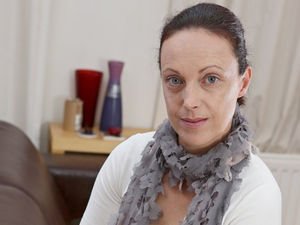
Rhiannon Davies, whose daughter Kate died after a series of avoidable failings in Shrewsbury & Telford Hospital NHS Trust's (SaTH) care shortly after she was born in 2009, said the call for evidence is a unique opportunity.
She said she understands the pain involved in reliving the trauma of child loss, but encouraged women and families not to miss the chance to tell their stories.
Ms Davies, alongside her husband, and Kate's father, Richard Stanton, was recognised with an MBE for campaigning to uncover shocking failings at SaTH, which were ultimately confirmed by the publication of the Ockenden Review in 2022.
She said: "This has never happened before. For the first time, families harmed, bereaved, and broken by maternity and neonatal care in England are being openly and formally invited to speak - honestly, directly, and without gatekeeping - through the National Maternity and Neonatal Investigation’s public Call for Evidence."
She added: "For decades families like mine have been told our experiences were 'isolated', 'historic', or 'unavoidable'.
"We were forced to relive trauma in complaints processes that went nowhere, or inquests that exposed way more failings than they could ever resolve, and in reviews that too often protected systems rather than people.
"This call for evidence, it is open to absolutely everybody. It allows people to choose what they share, how they share it, and their participation will shape the evidence - and the evidence will shape change."
Detailing her own harrowing experiences since Kate's death Ms Davies said she did not want any parents to miss out on the chance to tell their own stories.
She said: "I think silence now would be a missed opportunity and I think families will speak because someone is finally ready to hear.
She added: "If I found out about this after it closed and I hadn't had the chance to respond it would have killed another piece of me."
Ms Davies also urged those taking part to seek help and support - both mentally and with the physical task of sharing their story.
She said: "I would never underestimate the energy it will cost someone to fill this in. It will be very hard, there are people who will find it literally hard to make their hands write the words.
"Please however you can do it - use Chat GPT, use a voice recording, get someone else to transcribe it, dictate it to someone."
She added: "Nothing like this has ever happened before. I feel really emotional because for so long no-one wanted to listen after what happened to Kate."
A statement from the investigation explained how the responses will be used to develop national recommendations.
It said: "Listening to lived experience is central to the investigation, and the call for evidence will ensure that the voices of women and families, including fathers, partners and non-birthing partners, are heard. The investigation is seeking to understand the full range of experiences of maternity and neonatal care.
"Responses to the call for evidence will be used to inform the development of the national recommendations which will shape the future of maternity and neonatal services in England. The call for evidence consists of two surveys: one for women and people who have been pregnant to share their experiences of maternity and neonatal services; and one for people who have supported someone through pregnancy."
Baroness Amos said: “In my December ‘Reflections’ report I said that nothing had prepared me for the scale of unacceptable care that women and families have received and continue to receive, the tragic consequences for their babies, and the impact on their mental, physical and emotional wellbeing.
“I am grateful to all the families who have engaged with me so far, recognising just how difficult it can be for those who have been bereaved or harmed to relive those traumatic experiences.
“In this call for evidence, I would like to hear from women and families from across England about their experiences of maternity and neonatal services. The insights provided by women and families will assist me to identify solutions to the systemic challenges I described in December. I recognise that people may have different levels of comfort in sharing their experiences, and that some may choose to share only parts of that experience.
“I encourage women from a wide range of backgrounds to share their experiences, as this will allow me to better understand and address the inequalities which persist in the system. I also want to hear about where compassionate and safe care has been delivered to try and ensure that it can be delivered for all.
“My thanks, in advance, to everyone who takes the time to respond to the call for evidence including fathers, partners, family members and non-birthing partners who have supported someone using maternity or neonatal services."
The Call for Evidence is open to the public until March 17, 2026.
Responses can be submitted online at matneoinv.org.uk/call-for-evidence.
The call for evidence has been designed to allow everyone to have the chance to respond.
It is available online, with easy-read versions, translation into seven languages, and a postal option for those who prefer not to respond online.
Interpreter support and one-to-one interviews are also available for people who would like additional help to respond.
Baroness Amos encourages all women and families to participate including women and families who have experienced unequal access and care.
This includes, but is not limited to, women and families from Black, Asian and other ethnic minority backgrounds, women with disabilities, women who have mental health challenges, those living in deprived circumstances and marginalised groups.