Shropshire NHS trusts sign off plans for joint leadership but keep open possible future merger
Two NHS trusts in Shropshire have signed off plans to create a ‘group’ with a single leadership but leaders are keeping open the possibility of a merger in future.
Senior leaders at both The Shrewsbury and Telford Hospitals Trust (SaTH) and the Shropshire Community Health NHS Trust (Shropcom) agreed to creating a ‘group’ model at a joint meeting on Tuesday, September 23.
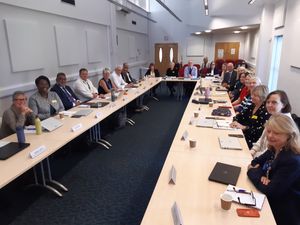
The meeting at Royal Shrewsbury Hospital was told that leaders are not ruling out a future merger, especially if the process was made easier.
But at the moment a joint leadership arrangement is considered the best way of improving outcomes for patients.
Nigel Lee, SaTH’s chief operating officer, said a merger was “carefully considered” but the creation of a single board offered the “optimum for collaboration.”
Leaders have also considered the “challenge, cost, and distraction” of merging at a time when they say the focus is on on creating a more community focused NHS. Both trusts will remain as separate statutory organisations.
Andrew Morgan, already the chair in common of both boards, said a merger could still be considered if the process of creating a group was “complex, getting in the way”.
And he added that if the merger process was simplified, they could still take up that option.
“A merger could take up to two years and end up paying lawyers loads of money,” Mr Morgan said. “We are not at the moment going for a merger.
“It would be too much of a distraction in what we need to do to transform our health system.”
Deciding on the size of the senior leadership team, including numbers on the board, is the next part of the process. A new group is expected to be in place by April 2026.
Both trusts would remain separate but the board would be able to make decisions across both organisations.
The move – called Better Together – is being promoted as a way to improve local services, create efficiencies, and enhance patient care through closer integration.
The organisations have been drawing up a “comprehensive culture, communications, and engagement plan” and the organisations say both trusts are “fully committed to maintaining openness and transparency throughout the transition to a group and into the future”.
A group transition committee is looking at developing a “programme of integration focused on the hospital transformation programme, the local care programme and shared services”.
In response to a question on how the move will affect patient care, SaTH said that the changes mainly affect the board and leadership.
“If we do decide to become a group, over time we hope patients and staff will see benefits through joint working leading to better care for everyone,” says a statement on SaTH’s website.
In background documents called The Case for Change, officials say it is the start of a process of creating transition and implementation plans. NHS England will beed to assess it.
Board documents say: “Acting as one NHS and working at scale, the trusts believe shared leadership will address the clinical, performance and financial pressures and enable the shift towards a preventative and neighbourhood service to meet the needs of an ageing and growing population.”
The two organisations already work together in areas such as payroll and finance.
“Both trusts currently face different but important and interdependent challenges which, without action to address them, will worsen over time,” the documents say.
“Both trusts agree that accelerating their partnership will deliver better care for the communities we serve.”
Leaders say in the background documents that there will be “risks in this process, such as ensuring that there is sufficient leadership capacity and capability to manage the change and deliver the operational plan.”
But the board meeting was told there are also risks to staying the same.
“The group model alone is not a panacea for improving performance. However, it allows the trusts to use scale as a platform and an enabler for driving improvements in clinical, operational and financial performance,” board papers said.
The cost of making the move to a joint leadership was not discussed at the meeting.