Trade talks a challenge
Post Brexit, the UK will have to become a member of the World Trade Organisation in its own right.
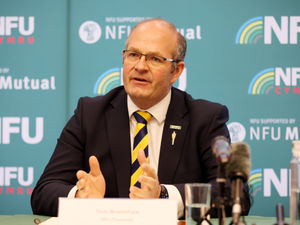
According to Julian Brathwaite, the UK’s permanent Ambassador to the UN and WTO in Geneva, after the UK leaves the EU, it will have to trade within WTO rules. This will bring changes.
Speaking on the second day of the 2018 NFU conference he said as a member of the EU, the UK is currently represented in negotiations with the WTO by the EU, which "speaks on our behalf” but post Brexit, the UK will have to respect WTO rules and become an individual member with its own ‘Schedule.’
This will have to be done as quickly as possible to enable the UK to negotiate new trading arrangements, including financial services with the EU if there is ‘No Deal’ for access to the EU markets, as well as seeking agreements within the WTO rules with other trading nations.
But Julian warned before that can be achieved the UK Schedule (which consists of the members’ commitments, their rights and obligations in the international trading system covering both goods and services), will have to be agreed by all 164 members of the WTO.
One solution to establish new trading arrangements would be for the UK government to seek to be able replicate the EU Schedule, although “It will not be possible to just cut and paste tariffs and quotas”.
The diplomat talked of current support payments which fall within the Amber Box which are deemed to less distorting than direct payments within the WTO rules and was adamant if those are to be retained by the UK they will have to be included in the UK’s schedule to minimise disrupting trading arrangements by replicating current policy. He spoke about splitting of existing quotas and tariff arrangements such as the New Zealand lamb quota but warned New Zealand is seeking to increase its access to the UK and intimated their representatives had been very quick in stating their case.
Julian said: “the UK plan is to listen and make some accommodation and to submit our schedule before we leave the EU….as it will be an advantage to get the base-line set for negotiating free-trade arrangements before we leave.”
Shanker Singham, an economist who is chairman of the Legatum Special Trade Commission spoke about trade policy.
The governing principal is that farmers want to farm and policy should create a platform for them to perform with fair competition.
He questioned what do farmers want from Brexit?
“What can we do unilaterally?. The starting point will be to control our regulatory system to allow farmers to farm and to lower tariffs (on imports) which are not competing with what we can produce to enable consumers to have cheaper products.”
Regulations, he said, should be based on sound science and that should be in the framework of the WTO agreement as should be “our ability to negotiate trade deals with other countries.”
He then looked at a possible agreement with the EU, which should be frictionless trade with tariffs between the UK and the EU on imports and exports and raised the issue of fair competition and pointed out that it is not necessarily fair now and as an example cited the support for French beef farmers and said “we want a level playing field.”
Shanker went on to ask “Do you want to be able to farm? Do you want to be able to use innovations?” and criticised the EU ‘Precautionary Principal’ approach which he said has held back things which have been agreed by the UK, but have been opposed by the EU and was adamant that any new regulations should “allow you to do what you want to do using the best tools available.”
Considering the UKs future role in international trading, the Legatum Trade Commissioner said the UK will need to convince countries outside the EU of what we can do and send signals that we can liberalise more than we can (while in the EU) to create partnerships and joint ventures.
“The UK must re-integrate into the global supply chain,” he said, including establishing international partnerships.
He quoted how effectively New Zealand uses partnerships in trading arrangements. It produces three per cent of the world’s dairy produce but through its partnership arrangements controls 30 per cent of the market adding New Zealand lamb goes into the supply chain of 100 countries at a premium.
Looking at the future outside the EU Shanker Singham was not unduly pessimistic about the effect leaving the EU would have on the financial services sector, saying that continental business interest will still need access to the City as without access to its capital resources their costs of borrowing will increase.
In conclusion, he said: “The government must create conditions for the transformation, keeping the £2.8bn (support payment), which should be more focused on farmers and active production.”
He cited English Heritage and the RSPB currently being big recipients and added the Universities should concentrate research on areas which will help farmers and focus funding on doing what the farming industry needs.