Maximum utilisation of grass key to profitable milk production
Grass is key to the dairy farming system for former British grassland Society President David Lee who farms at Winnington Green Farm near Welshpool with wife Rachel and son James.
“I do not feed maize silage to my cows,” he says, “it is too expensive, too unreliable and grass crops are more cost effective and efficient.”
Speaking to British Grassland Society members visiting the 440-acre farm as part of the highly successful four-day Summer Meeting in Shropshire, he said the aim is to get maximum utilisation of grass, by achieving 15.5 tonnes/hectare of dry matter, which he says has a direct relationship with to profit.
One of his leys has been down 35 years, rejuvenated by over seeding which he prefers rather than reseeding after ploughing. A new ley may produce 16 tonnes of dry matter in the first year he says, but if careful management is not maintained it will soon be back to producing eight tonnes of dry matter a hectare.
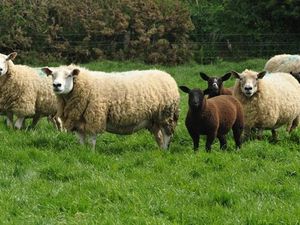
Their 405 Kiwi type Jersey x Friesian cows, average weight 475kg, are run on the New Zealand system, spring calving in a 12-week block from February 7.They are turned out to electric fenced paddocks on the 96ha grazing platform from February 25, starting with a group of 40 or so heifers, which start calving a week before the cows.
Grazed on average nine times during the grazing season ends late November with the cows being brought in at night after November 1. The rotation round the paddocks takes 50 days to begin with but is down to the 25 days average by June. The aim is for the cows to eat 75kg of fresh grass a day, 15kg of dry matter. They are moved onto a new 4four-acre paddock after each milking. Every paddock is fertilised with 20 to 30 units of N after each grazing. Grass growth is monitored every five days and every two weeks samples are sent off for analysis.
Milked twice a day in a 40 point external entry rotary milking parlour which built in 2009 fits neatly into an existing building, one man can milk the 405 cows in one and three quarter hours. The herd average is 5,000 litres at 4.7 per cent butterfat and 3.7 per cent protein with the milk sold to Arla. Concentrate use is 750kg/cow, with the aim to reduce it to 600kg by further increasing the present 4045 litres a cow produced from forage.
The cows are brought inside at the beginning of December, and from December 10 to 14 are all dried off, giving a two-month period of no milk production. Culling is based more on lameness and cell count levels (presently SCC180 and bactoscan 25) than strictly on production.
Serving the herd starts with the heifers on May 1, followed a week later by the cows. The heifers are served in rotation by two of the four Aberdeen Angus bulls on the farm, whilst all the cows are AI served by Kiwi Friesian type bulls for three weeks, British Blues for three weeks, then by the Angus. The cows have for the last nine years worn Heat Time electric collars which at a cost of £12 a year is worthwhile David said, and a PD by the vet gives peace of mind.
Friesian-type bull calves are sold at 10 days old, British Blue and Angus sired calves are sold at four to five months, and reared heifers are sold in the store market. Their 100 acres of ex golf course land is used for heifer rearing, whilst a neighbour grows them 25 acres of triticale whole crop to feed to the dry cows. Sheep on tack use the off-land silage ground in the winter.
They have more fields near to the farm which could be grazed but as the Shrewsbury to Aberystwyth railway line runs across the road to it, they dare not risk walking the cows over the level crossing.
TB has been a constant concern, last year they lost 20 cows. Clear of restrictions this summer they fear the possibility of another breakdown this autumn, bringing with it all the problems, costs and restrictions on the sale and movement of livestock.
They have made some excellent silage this year from their four cuts of grass producing 28 tonnes of fresh material/ hectare equal to 6/7 tonnes of dry matter, or 15 tonnes of maize. Their aim is to further increase their stocking rate of 4.3 cows a hectare, by even more careful grassland management.