Brexit 'will not lead to fall in standards', says president of NFU
Britain's exit from the European Union will not lead to a driving down of standards in domestic food production, the president of the NFU says.
Meurig Raymond was speaking while visiting Telford for the Energy Now renewable energy expo at The International Centre.
He said the volume of exports from British farmers onto the continent meant that it would be "impossible" for farmers and growers on British shores to cut standards after Brexit.
"Farmers voted for Brexit on the back of the prospect of deregulation," he said.
"My argument to government in any possible trade deal is that we must not allow imports of food into the UK that has been produced to a lower standard than is expected of British farmers.
"It will be very difficult for UK farmers to reduce their standards of production, especially when we export such a large amount – particularly of sheep meat and cereals – to the EU.
"If we reduce standards of production, we could easily see our European partners prevent the import of our products."
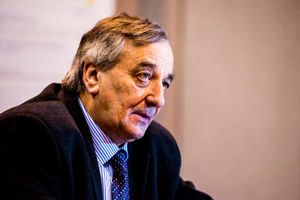
He added: "There's a huge discussion taking place at the moment. The trade deal that will be finalised between ourselves and the EU will have a huge bearing on the future of British agriculture.
"It's the ability to export produce into the European Union free of any tariff barriers that has got to be the priority if farming is going to prosper.
"That trade deal is important, although we also need to be looking at the opportunities of exporting to new countries."
The impact of Brexit on farmers remains as uncertain as for any area of British industry, with issues surrounding trade tariffs with the EU and the rights of workers still unclear.
At present European policy influences a significant part of British industry, with the Common Agricultural Policy and its associated subsidies playing a key role in shaping British agriculture.
Mr Raymond said: "There's a great opportunity – or there ought to be – out there to substitute imports with more home-grown production.
"There's no doubt that the depreciation of the pound to the euro has helped farmers in the short term.
"But now we are finding inflation in the inputs we are purchasing, like energy, fuel and fertiliser, means those costs are increasing on the back of the weaker pound.
"My message is to buy more British produce, and drive the UK supply chain. We know the general public would much prefer to see high quality British produce on the shelves, particularly with the red tractor label."
He added: "We have got to look for the opportunities that are created – that has to be our number one priority.
"It's about making certain we have the right trade deal, and it's also important that we have access to the non-British labour that's required, particularly in the horticulture sector.
"It's also important that when a domestic agriculture policy is formulated that we are not disadvantaged to our European colleagues from 2020 onwards, because our major competitors will still be the Irish, the Dutch, the Danish and the Germans.
"If we were forced to operate on an unfair playing field it would not lead to a profitable, innovative farming industry post-2020."
Mr Raymond, who farms 3,400 acres in Pembrokeshire, was re-elected as president of the influential farming body last year, having risen to the role in 2014.
The renewables event is focused on the farming industry, and sees about 3,000 people pass through Telford's International Centre over the course of two days. It concluded today.
It has been coming to the town for nine years, but has recently been affected by a drop-off in the subsidies available for people producing their own energy.
"Farmers have invested heavily in the renewables sector over the last few years," Mr Raymond added.
"There's a passion for clean energy , and it's a way for farmers to reduce their costs. They are attracted to this even because the majority of the people involved in the sector have trade stands here at the show, and they can make the case for future clients."
Event director David Jacobmeyer said he had been pleased with the turnout to the annual conference, and that while many subsidies had been cut, there remained demand for renewables.
"Normally we have more than 3,000 people over the two days, and this year seems to be about on a par with previous years," he said.
"A big part of it is farmers trying to figure out where opportunities remain despite subsidy reductions and policy shifts."
He added: "Energy storage seems to be the big thing this year. If you think about a solar scheme on a dairy farm, a lot of power is being produced while farmers are not using it, during the day when they might be out milking.
"If they can generate it during the day and use it in the evening it's going to solve a lot of problems for them."