Brexit: Farmers in Shropshire are left asking what happens next
Britain's exit from the EU leaves farmers in Shropshire asking what happens next, experts in the county say.
Yesterday's referendum, drawing a veil over weeks of fierce and, at times, bitter campaigning led to the historic decision that Britain should quit the European Union.
Now, according to Ken Greetham, the chief executive of agricultural supply firm Wynnstay, the question of centralised support provided for farmers and rural communities will come into sharp focus.
The Llansantffraid-based business, which also has a major operation on the outskirts of Shrewsbury, is a major producer of seeds and feed for Britain's arable and livestock farmers.
"The decision for the UK to leave the European community brings a question over the level of economic support for agriculture and rural communities," Mr Greetham said.
"It is likely that some financial support for agriculture will continue and the government will recognise the strategic importance of the agricultural industry.
"The exit agreement and new trade deals will be negotiated over the next two years, during which time the UK remains as an efficient producer of agricultural products supplying food products to the domestic and world markets."
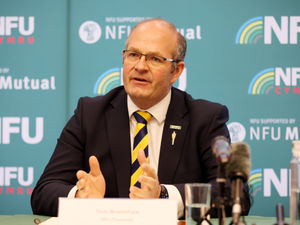
Farmer Bruce Udale was among the most outspoken pro-leave campaigners in Shropshire's agricultural community, quitting the NFU after it came out in support of a Remain vote, although the farming union insisted that it was a decision based on the need to raise a cap on spending and to allow it to inform members of the different arguments being laid out by each campaign.
Following last night's Brexit vote, he said: "I would suggest that David Cameron will not last long as leader, in spite of what has been said, and we will have to sort out where the Conservative Party is going."
He added: "Professionally, we are now free to do our own conservation programmes, our own trade around the world, and at the moment we are dependent on the EU.
"I know farmers who are exporting organic milk to America and Canada – it's amazing what's going on.
"If our subsidies decrease – which they may do in the long term – it's not the end of the world. We can start living with fewer subsidies, which will make us more efficient in the long term, like New Zealand where farmers manage without subsidies.
"It may be awkward for a few farmers that are in trouble at the moment, and it won't be easy for them, but at the end of the day it will be better for young people coming into farming."
Steven Corfield, head of agricultural and rural services at county law firm FBC Manby Bowdler, warned that gaps left in funding for farmers must now be plugged by the UK Government.
"The topic of the EU Referendum has been the most debated issue among British farmers for many, many months and today, there will be many of them wondering what happens next," he said.