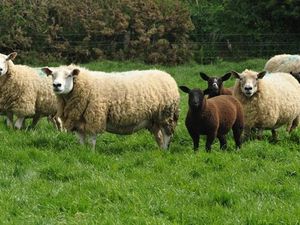
County bluetongue bombshell
Embattled Shropshire farmers have been dealt another bitter blow today with news that most of the county has been enveloped in a bluetongue protection zone. Embattled Shropshire farmers have been dealt another bitter blow today with news that most of the county has been enveloped in a bluetongue protection zone. Although the outbreak is on a farm in Peterborough, the 150km protection zone extends across the Midlands to the Welsh border. Just a tiny corner of north west Shropshire is unaffected. The consequences for livestock movement are enormous, even though the disease is not present in Shropshire. While farmers can continue to move animals within the zone, nothing is allowed to be moved out - unless to slaughter at authorised abattoirs. Read the full story in today's Shropshire Star
 Embattled Shropshire farmers have been dealt another bitter blow today with news that most of the county has been enveloped in a bluetongue protection zone.Although the outbreak is on a farm in Peterborough, the 150km protection zone extends across the Midlands to the Welsh border. Just a tiny corner of north west Shropshire is unaffected.
The consequences for livestock movement are enormous, even though the disease is not present in Shropshire.
While farmers can continue to move animals within the zone, nothing is allowed to be moved out - unless to slaughter at authorised abattoirs.
Defra made the announcement on the day that foot and mouth restrictions were revoked in England.
David Collier, regional director of NFU West Midlands in Telford, said: "The NFU will continue to help farmers fight bluetongue but this is a bitter blow for our members.
"Many will feel kicked in the teeth following what has been an awful couple of months for the industry.
"We will continue to speak to Defra and the Government and discussions about markets, animal movement and a bluetongue vaccine will be ongoing."
Bluetongue is a debilitating disease carried by midges, never before seen in the UK until an outbreak at a rare breeds farm in Ipswich last month.
Initial studies roughly estimate that a midge can travel up to 2km a day. However, if caught in suitable meteorological conditions they can be carried more than 200km.
Symptoms in sheep are like foot and mouth disease but in cattle, goats and deer they may not even be seen. Milk yields of infected dairy cattle can drop by 40 per cent and some animals that survive suffer muscle wastage.
Whitchurch farmer Simon Latter said the industry would be reeling as it woke to the news.
"If you want a situation to knock the stuffing out of farmers then this is it," he said. "What is slightly suspect is the boundary of the protection zone, which zig-zags down the border. It's not as if a midge gets to the border of Oswestry Borough Council and says 'Oh dear, I better not go any further'."
By Rural Affairs Editor Nathan Rous