County farms face tough year
Farmers across Shropshire have resigned themselves to one of the worst years on record following the second outbreak of foot-and-mouth disease in six weeks. Farmers across Shropshire have resigned themselves to one of the worst years on record following the second outbreak of foot-and-mouth disease in six weeks. Many were hoping that a bumper September's trading would help recover huge losses caused throughout July and August from widespread floods as well as the first outbreak of the virus at Pirbright in Surrey. Now, with a further outbreak confirmed at Egham in Surrey yesterday, hopes have been dashed. With nationwide restrictions on movement of livestock imposed once again, Mervin Mullard, an upland farmer from Mainstone, near Bishop's Castle, said farming was becoming a logistical nightmare. Read the full story in today's Shropshire Star.
 Farmers across Shropshire have resigned themselves to one of the worst years on record following the second outbreak of foot-and-mouth disease in six weeks.
Many were hoping that a bumper September's trading would help recover huge losses caused throughout July and August from widespread floods as well as the first outbreak of the virus at Pirbright in Surrey.
Now, with a further outbreak confirmed at Egham in Surrey yesterday, hopes have been dashed.
With nationwide restrictions on movement of livestock imposed once again, Mervin Mullard, an upland farmer from Mainstone, near Bishop's Castle, said farming was becoming a logistical nightmare.
"My farm is dissected by council rights of way so I can't even move my animals from one side of the road to the other," he said.
"Obviously people in this area are hoping Defra grant special licences for movement so we can at least do the bare bones.
"This is a really busy time of year with the major sheep sales taking place this month and farmers preparing to move a lot of store stock off the farm. At the moment everyone is stranded."
Whitchurch farmer Simon Latter, Shropshire's NFU Council delegate, believed the Government was too quick to give England the all-clear.
"A few old heads were saying that it was a week or so too early to lift restrictions and they have been proved correct," he said.
"Given that Defra had every opportunity to test thoroughly during the first outbreak, the fact that foot and mouth has appeared again does imply incompetence.
"The incubation period in cattle is between two and 14 days but it is far tougher to spot it in sheep than it is in cattle. Perhaps the herd had contact with sheep who weren't displaying the symptoms and that is why we are sitting here, 30 days after the supposed end of the last outbreak, with another case on our hands?"
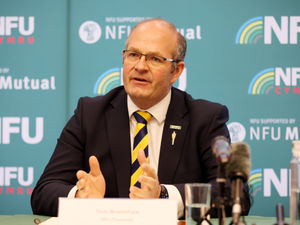
David Collier, regional director of NFU West Midlands, said farmers across the region would be shaking their heads in disbelief over the latest outbreak having only just welcomed the lifting of restrictions.
He said he felt for members as the industry was just starting to get back to normal following what had been a difficult and worrying couple of months.
Mr Collier, who is based at the NFU's regional HQ in Telford, said: "This is the last thing that farmers need or would have expected.
"Farmers will be shaking their heads in disbelief and the restrictions, although necessary to stop this disease, will be felt deeply across the whole region.
"Everything appeared to be getting back to normal following what has been a very difficult time over the last few months and it's a huge blow that the industry has been disrupted yet again.
"Many will be stunned by this latest outbreak and the last thing anyone wants is a repeat of 2001 which caused so much damage and heartache for farmers and others in the industry.
"Following last month's outbreak it appeared foot and mouth had been contained but with the new case confirmed we now need to look ahead, help our members and focus on controlling and eradicating this disease as a matter or urgency."
He said the difficulty at the moment was over the need to move stock from upland to lowland farm areas and action needed to be taken to address this.
While he said he was sure farmers would understand the need for the movement restrictions as they had in the past few weeks, however, efforts now needed to be made to get things moving forward as quickly as it was safe to do so.
Mr Collier added: "I'm sure our members will continue to be vigilant as bio-security is of paramount importance.
"We will continue to monitor the situation, continue the dialogue with Defra and inform our members by issuing briefings and posting updates on our website www.nfuonline.com."
Ludlow MP Philip Dunne, himself a livestock farmer, was shocked by news of the outbreak.
Speaking from the Gaza Strip where he is working with a peace delegation, Mr Dunne said: "This is terrible news for farmers and all who use the countryside. Just as the livestock trade in England was starting to get back to normal it has been halted in its tracks.
"Farmers are rightly worried about the disease spreading again. Were movement restrictions in Surrey relaxed too fast after the first outbreaks?"
Mr Dunne said he remained "very concerned" by the Government's handling of bio-security at Pirbright after the first outbreak.
He said: "Last week's reports made clear that routine maintenance and recommended improvements to bio-security were not carried out. This has led to escape of the FMD virus.
"I have put down a series of detailed questions to the Secretary of State about bio-security measures at the Institute and I want them on record."
By Rural Affairs Editor Nathan Rous