Go-ahead farmers look forward
The figures speak for themselves: three dairy farmers are packing up their parlours every day, meaning milk production in Shropshire could cease within three years.
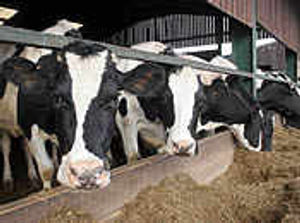
The figures speak for themselves: three dairy farmers are packing up their parlours every day, meaning milk production in Shropshire could cease within three years and in the UK as a whole by 2015.
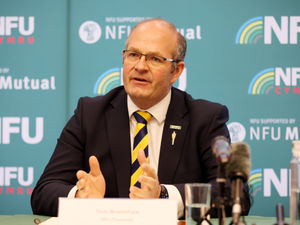
No wonder the head of the National Farmers' Union ensured the dairy crisis was top of his agenda at last month's NFU annual conference by saying the industry faced "meltdown" unless supermarket chains acted to create a fairer business relationship with their suppliers.
Peter Kendall called on the big retailers to follow what he called the "Waitrose model" and pay a fair price.
"I think if we are going to halt the really dramatic fall off (in dairy production) then retailers have got to get off their backsides and act pretty sharpish," he said.
He criticised the supermarkets for favouring short-term profits over long-term sustainability in their approach to milk.
Mr Kendall said: "In the City, 'long-term' means after lunch, and we are talking about an industry that really does want to be looking three, four, five years ahead."
He directed a large part of his venom at Justin King, the chief executive officer of Sainsbury's, who shared the platform.
He said: "Justin, this sector is in meltdown and we need action.
"To play two of your straplines back to you - please 'Try something new today' and make sure your farmers get to 'Taste the difference' with your policies."
But despite his pressure, few retailers look close to buckling, even though they only need to pay an extra 4p per litre to the farmer to take the industry from the brink of collapse to the brink of success.
So what is the mood like on the farm? How can dairy farmers regroup and survive, let alone build an industry with a future?

Named dairy farmer of the future for 2006 by the Farmers' Guardian, Robert is optimistic about the future and convinced that farmers can battle through the hard times with some sharp business acumen.
Thanks to shrewd acquisition and minimal capital investment, the herd has grown to 900 over three sites and there are plans for even more in the near future.
"Being a farmer just isn't enough these days," he explained. "You have to be a businessman as well.
"The margins are tight in milk and the price does need to improve if dairy farmers are going to invest in the future. However, we should be treated just like any other business in that it's survival of the fittest.
"A lot of farms will go under because they either can't invest or their production methods are too costly. Certainly the smaller herds of say 80 to 100 aren't as viable as they were 15 years ago because they are just as labour intensive as a herd three times that size."
A few pence here and there does not seem a lot, but with production costs soaring everything has to be done to trim overheads.
"Fuel costs have gone up, labour costs have gone up, fertiliser has gone up and so have feed costs," Robert explained.
"Yet in this time the milk price has gone down. The problem is that farmers are not in a position to bargain. In fact, until there's a shortage of milk we will always have a fight on our hands over price."
But for those farms in a position to expand, the future looks bright.
"We don't want to get ahead of ourselves but we have to expand to succeed," Robert added. "I feel sorry for the people getting out of dairy but I have to see that as an opportunity for us."
It's a lot for a 23-year-old to organise, especially one who still wants a social life.
"We all work 90 hours a week on the farm so it doesn't leave too much room for fun, but I'm chairman of Alberbury Young Farmers' Club this year and that gives me an opportunity to get out and enjoy myself," he said.
By Rural Affairs Editor Nathan Rous