New funding to stop 19th Century Powys canal running dry
Funding has been secured to prevent one of Wales' most popular canals running out of water
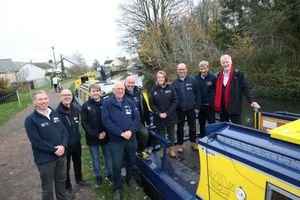
During unseasonally dry weather last March, there were fears the 225-year-old Monmouthshire and Brecon Canal could run dry within days, upending the 1,000 jobs which rely on the waterway.
Now a joint provision between the Welsh government and the Canal and River Trust has agreed to contribute half a million pounds annually, for five years, to make sure the water supply remains constant.
Huw Irranca-Davies, the deputy first minister with responsibility for climate change, said the money would provide "the space to develop long-term resilience for this precious waterway".
The 35-mile (56km) waterway weaves its way through the Bannau Brycheiniog National Park - formerly known as the Brecon Beacons National Park - and the Blaenavon Industrial Landscape, a World Heritage Site, attracting an estimated three million visitors every year.
More than 1,000 jobs rely on the waterway, which contributes £30m to the Welsh economy.
The water supply came under threat this spring and summer because of limits placed on how much water could be taken from the, environmentally sensitive, River Usk.
Up to £400,000 will now be provided by the Welsh government every year "sustaining the water supply", with the Canal and River Trust spending another £100,000 annually.
"A canal is nothing unless you actually have the water in that canal," said Irranca-Davies.
"That's what makes people come here - that's what the quiet enjoyment is," he said, while highlighting the canal's significant biodiversity and the "thriving businesses" which depend on it.
Ben Cotton, from the Canal and River Trust, said the waterway plays a significant role in the area's economy:
"Somewhere like Talybont or Usk, you walk through the village and you see the canal-side pubs, cafes and shops that are reliant on that trade that passes through the canal."
"It is the most visited attraction within the national park, so this is a core part of the heritage and fabric of mid-Wales."
Earlier this year, approximately £5m was spent refurbishing the Manorafon pumping station and securing the water supply until spring 2026.
Georgina Wood, regional operations manager for the Canal and River Trust - the charity which helps maintain the canal - said without the investment and ongoing funding, there would have been safety and maintenance issues.
"The canal this summer would most definitely have run dry and then we would have had significant issues in maintaining it," she said.
She said it might have led to wooden lock-gates drying out and cracking, as well as issues with weirs and sluices.
The funding has been welcomed by local politicians.
Brecon and Radnorshire Senedd Member James Evans MS said: “I am delighted to see Welsh Labour Government have finally realised that they need to support the Canal. This is a mess of their making following the decision by them/NRW to limit water abstraction.
“This money and support has come about thanks to the petition, representations from local groups and residents, and political pressure in the Senedd. Glad to see common sense has prevailed for once”
Welsh Liberal Democrat Leader Jane Dodds said: “This is a huge relief for the communities and businesses that depend on the canal. We have been fighting for certainty and long term security for this waterway because it is not just part of our heritage, it is the backbone of the local economy.
“I am delighted that funding has now been secured to protect jobs, support tourism and keep this iconic canal flowing for future generations.
“Earlier this year more than £5 million was spent on urgent works at the Manorafon pumping station to keep the canal supplied until 2026, but long term funding had remained uncertain until today. The new five year agreement provides the stability needed to plan properly for future resilience, helping to ensure the canal remains a global attraction and an economic lifeline for mid Wales."