Wood burner ban rules explained - here’s the lowdown on Labour’s updated environmental plan and whether it will affect burners already sold
Rules for wood burners could be tightened to lower their smoke emissions as part of the Government’s updated environment plan.
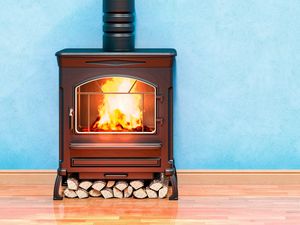
The Government said it will consult on measures to reduce the environmental impact of the public burning wood, such as stoves and bonfires, as it unveiled the revised environmental improvement plan (EIP) today (Monday, December 1).
Under the proposals, manufacturers of stoves that use “solid fuel” could have to phase out or amend older models to ensure they meet the new standards.
This will not involve a ban on the use of older stoves that have already been sold.
Pollution limits may also be tightened in smoke control areas of the country, where there are restrictions on what fuels can be domestically burned in fireplaces or stoves.
Ministers said the consultation will seek to minimise the impact these changes have on those who need to burn wood and to respect traditional celebratory festivals such as Bonfire Night and Diwali.
It comes as part of the proposed measures to tackle air pollution in the updated EIP, which replaced the last government’s plan with a series of new environmental targets.
The Government has tightened the target to cut the concentrations of PM2.5 – a fine particulate pollutant linked to asthma, lung disease and heart conditions – by 30% by 2030 compared to 2018 levels.
According to the official figures, a fifth of PM2.5 emissions in 2023 came from domestic combustion.
UK standard in line with the EU
It is understood that the EIP will bring the UK’s PM2.5 standards in line with the EU, which was not the case under the previous EIP, published by the Conservatives in 2023.
Rosamund Kissi-Debrah, whose nine-year-old daughter died from an asthma attack linked to air pollution in 2013, welcomed the new PM2.5 goal, as a “win”.
Ms Kissi-Debrah has been campaigning for “Ella’s Law”, which would require the Government to achieve clean air throughout England by January 1 2030, setting out a pathway to bring the country in line with World Health Organisation air pollution guidelines.
“It’s not quite Ella’s Law yet, but it’s a step in the right direction,” she told the Press Association.
“So because of that I’m pleased.
“Anything that’s going to improve the air, and that means less children are going to be hospitalised and less children are going to die, I am always going to be for it.
“Obviously, it’s not everything which I want, and (Environment Secretary Emma Reynolds) knows that, but I would take this win.”
Other issues confronted by the Environmental Improvement Plan (EIP)
Elsewhere, the EIP sets out a new series of targets on tackling harmful chemicals, reducing invasive species and restoring ecosystems.
Ministers will aim to restore or create habitats across 250,000 hectares by 2030 – an area larger than Greater London, updating the target of 140,000 hectares by January 2028.
They also promise to publish a plan next year for tackling PFAs, which have been linked to a range of health conditions and are known as forever chemicals because they take centuries to break down in the environment.
And the goal to reduce invasive species has been updated to 50% by 2030 compared to 2000 levels, by preventing new invaders from becoming established and managing existing ones, such as American Signal Crayfish and Japanese Knotweed.
For the first time, the Government will also consult on increasing farmers’ uptake of methane-suppressing cow feed products to cut planet-heating emissions.
On access to green spaces, ministers unveiled plans to strengthen the public’s legal right.
Guy Shrubsole, from the Right to Roam campaign, said he welcomes the announcement but said officials have already been working on it for six months.
“Why not just legislate for this in the next King’s Speech?
“All Labour governments since the war have passed laws to extend public access to nature – does this Labour government want to be the first that fails to do so?”
How will the Government deliver the EIP?
The Environment Department (Defra) said the Government will work with individuals, communities, farmers, businesses and local authorities to deliver the EIP.
It said £500 million of existing departmental money will be allocated to accelerating landscape recovery projects, which involve ministers working with farmers and landowners on larger-scale efforts to restore wildlife, over at least a 20-year period.
Meanwhile, £85 million will go to improving and restoring peatlands, as well as £3 million to improve access to nature in public forests, such as rolling out accessible bike trails and all-terrain mobility equipment.
Environment Secretary Emma Reynolds said: ”Our environment faces real challenges, with pollution in our waterways, air quality that’s too low in many areas, and treasured species in decline.
“This plan marks a step change in restoring nature.
“Our ambitious targets are backed by real action to cut harmful air pollutants, revive habitats and protect the environment for generations to come.”
The plan is a legal requirement under the Environment Act, aiming to implement a broader commitment to significantly improve the environment for the next generation.
For the first time, ministers will also publish delivery plans for Environment Act targets, which set out which organisations will carry out actions that contribute to the overall aims and how progress will be measured.