What happens after you flush the toilet? - We visit Severn Trent's sewage treatment works to find out
Ever wondered what happens after you flush the toilet? Well, here's what.
The Shropshire Star was given an exclusive tour of the Monkmoor Sewage Treatment Works in Shrewsbury that serves a catchment of more than 115,000 people.
The sewage water plant treats a combination of domestic and trade waste. It includes four storm tanks that temporarily store excess rainwater, alongside primary settlement tanks that separate settleable solids from wastewater, Activated Sludge Process (ASP) lanes where wastewater is treated, further final settlement tanks and a sludge treatment facility where electricity is created.
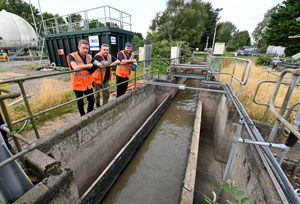
What arrives at the plant is, well, what the mind can imagine sewage to be. But, what is released into the River Severn at the end of the treatment process is clear water that is unrecognisable to its previous form.
The plant has benefitted from a £6.2 million investment to improve the quality of treated effluent that is released into the river. New cutting-edge Membrane Aerated Biofilm Reactors (MABR) have been installed at the facility, helping Severn Trent to treat more wastewater without the need to expand the site, and also more effectively clean it.
The technology is the first of its kind to be used in the country and helps to ensure that water which is returned to the watercourse is the "closest state possible to the river".
It might not be the most glamorous place, but behind the gates of the Monkmoor Sewage Treatment Works, like others, there's a whole lot more going on than meets the eye - and it’s anything but 'bog-standard'.
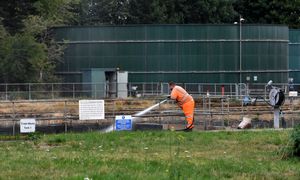
Each day, thousands of litres of wastewater from toilets, sinks, showers and drains make its way to the treatment works, and it's here that the dirty work begins, literally, and our not-so-fresh water gets a much-needed clean up before returning safely to the environment.
Wastewater Recycling Lead at Severn Trent, Andrew Bradford described the process in simple terms.
He said: "We clean wastewater through several steps to remove harmful substances and make it safe to return to nature. Here’s how it works:
"Preliminary Treatment: Large items like wet wipes, sanitary products and plastic are removed using screens. Primary Treatment: Heavy solids settle at the bottom of tanks and are taken out as ‘sludge’.
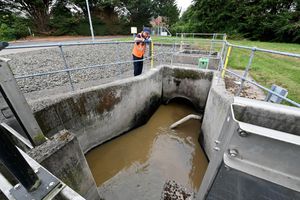
"Secondary Treatment: Tiny organisms break down the remaining pollutants in the water. Sludge Treatment: The ‘sludge’ is further treated, thickened, broken down by bacteria (which can produce biogas – a useful by product that we can use to generate power), and dried to reduce its size.
"Final Step: The clean water is then released into rivers or streams and the treated ‘sludge’ has several uses in other industries."
Separate solids from liquids
Until you see it first-hand, you don't believe how large the process is after you flush the toilet. Our tour began at the very first stage of the treatment process, where the sewage is broken down and separated into solids and liquids.
Inlet screens remove large objects such as plastic, rags or other debris that could damage equipment or clog pipes. The team working at the Monkmoor Sewage Treatment Works revealed some of the unusual things that have been flushed down the toilet and ended up at the site. These include bricks, jewellery such as wedding rings, false teeth, toothbrushes, and toys including a plastic car.
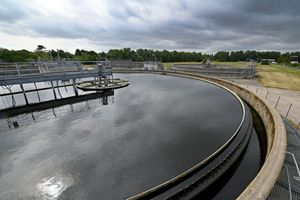
Severn Trent urges customers to help it avoid blockages in the sewers by only flushing the 3Ps - pee, poo and paper.
Storm tanks
The treatment works are designed to treat a staggering 642.5 litres of wastewater per second. But, during extreme weather and storms, the amount of sewage that is pumped to the site increases significantly.
The site has four large storm tanks that store any flow beyond what the treatment site can take at a time. During summer, these hardly see a drop, but they are utilised more often during the harsher winter months.
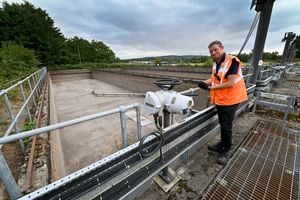
If the flow goes beyond the storm tanks, then the wastewater is deposited into the environment. But, Severn Trent said at this point, the water is diluted.
In recent years they have added extra storm tank capacity at the site so they can reduce storm overflows and spills. Any spills and overflows are all monitored and mandated by the Environment Agency, and must be compliant with regulations.
Cameras are installed next to the storm tanks. Their requirement was compared to the need for a dashcam on a car, they are there for insurance purposes if there was an event.
Primary treatment
As treatment continues, grit is separated from the wastewater and taken away to landfill. The wastewater then goes through primary treatment that is designed to separate out heavier organic matter and any floating material.
Large circular tanks receive, that were first built in the 1960s before more were added in line with Shrewsbury's growing population, screen crude sewage and are used to create relatively still conditions so heavier materials sink to the bottom as primary sludge while fats float to the top and are removed by a scraper mechanism.
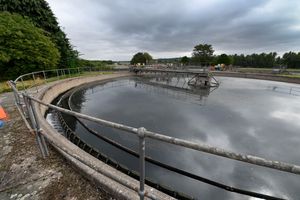
Sludge is removed from the base of the tanks and pumped away for further treatment. This sludge is also converted into electricity and provided for farmers.
The remaining light organic solids and dissolved material is then carried forward in the general flow and to the next stage as settled sewage.
Secondary treatment - the biological stage
This is a biological stage where bacteria and other micro-organisms break down most of the remaining organic matter in the sewage into water, carbon dioxide and nitrogen.
This stage of treatment at Monkmoor has benefitted from the installation of Membrane Aerated Biofilm Reactors (MABR) that aids the process.
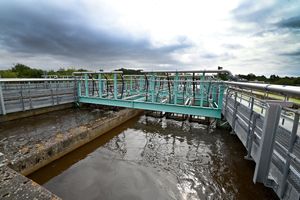
The bacteria is provided with ideal conditions to work and use the organic matter as their food. Settled sewage is broken down in the process and is continuously fed to the tanks, mixing with treatment bacteria.
Sludge treatment
Treating sewage produces sludge that contains organic material and valuable nutrients that are suitable for improving soil structure. However, it requires further treatment before it is safe to use on land.
The sludge is digested in enclosed tanks. Bacteria breaks down the sludge, destroying any potentially dangerous pathogens.
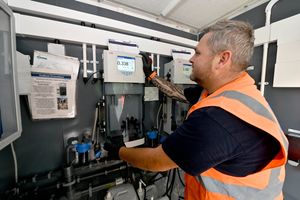
The process produces biogas that contains methane which is burned to recover energy.
Once the digestion is completed, the sludge is turned into 'cake' for recycling to farm land and restoration sites.
Tertiary treatment
Treatment is monitored throughout and to the very end. The final standard of effluent that is discharged into the River Severn is monitored and determined by the Environment Agency.
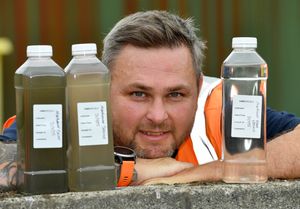
On-call staff will be called to the final effluent monitoring kiosk should there be any issues. And, samples are taken throughout different stages of treatment and displayed the transformation.
There is a visual impact when the water is discharged into the river, and noticeable 'bubbling'. This is due to the wastewater being aerated, and disappears moments later.
Wildlife area
Between the main works at the plant and the river bed is a wildlife area. Severn Trent has recently invested in new plants for this space as part of its biodiversity pledge.
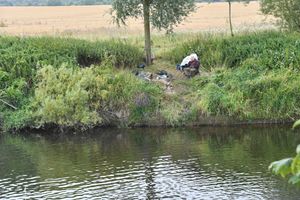
Although it is not a listed nature reserve, the space features a range of wildlife and bugs, and a bird hide, and the water company works closely with the RSPB.