Lack of subject choice at school sixth forms is a reason why Powys pupils leave the county to continue their education elsewhere
The lack of subjects available to study in Powys school sixth forms is a factor in the brain drain which sees pupils leaving the county to go elsewhere to continue their post-16 education.
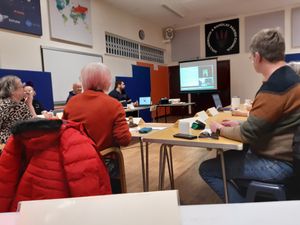
At a meeting of Powys County Council’s Learning and Skills scrutiny committee on Friday, February 13, councillors and independent lay members received a report based on the last summer’s GCSE and A-Level results in the count.
They show that Powys pupils do well at GCSE, which is above the Wales average, but this performance drops off at A-Level with pupils lagging well behind the national average.
Councillor Lucy Roberts (Conservative – Llandrinio) said: “The committee is concerned that the A* (star) to C results at A-Level is well down compared with others nationally .
“We’re wondering how and why the numbers of A-Level entry is decreasing?”
The report shows that in 2024/2025 there were 702 youngsters entered for A-Levels which is down from 784 in 2023/2024 and 842 in 2022/2023.
Cllr Roberts asked: “If they are choosing to go out of county is it down to not being able to take the subjects they want, or because they are not getting the level of teaching they would wish for?
“Are the highest performing leaving the county to seek that breadth of curriculum?”
Director of Education, Richard Jones believes that there are a range of reasons behind the drop in A-Level pupils.
Dr Jones said: “Teaching and learning is not where it should be at key stage five (sixth forms) – we’ve not invested like we have at key stages, two, three and four.
“It’s become forgotten over time.
“That coupled with the shrinking of the curriculum – meaning we have got learners remaining in our sixth forms potentially on courses they are not suited to, or they don’t want to do.
“That’s based on the fact that we can see our percentage of U grades going up.”
The report indicates that last August one per cent of Powys pupils received a U – or unclassified – which is a fail.
This is 0.1 per cent higher than in 2024 and 0.6 per cent above the national average.
Dr Jones continued: “We are addressing that by strengthening quality assurance in our schools.”
He told the committee that school improvement advisers had “very little engagement” with sixth forms, but this is now changing and the same level of help is now being given all across the age groups.
Dr Jones said: “They didn’t look at lessons they didn’t look at books or what was being produced in the more practical subjects.”
Dr Jones added that school advisers were also working closely with the heads of sixth forms to better “evaluate” and “plan” to put in strategies to improve results.
In discussions with pupils the council has already held as part of starting the post-16 reorganisation process, he said that the “narrowness” of the curriculum being offered was a major concern for youngsters.
Dr Jones said: “That’s what our learners are telling us is in all the engagement work that’s been undertaken.”
Committee chairman Gwynfor Thomas (Conservative – Llansantffraid) said that the pupil’s comments were an “important point” when the council goes on to develop a new strategy for Post-16 education in Powys.