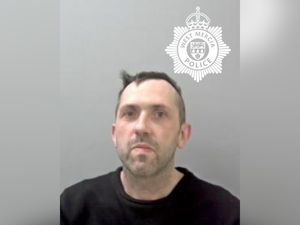
Powys farmer who docked the tails of 80 lambs has been fined for causing unnecessary suffering
A Powys farmer has admitted causing unnecessary suffering to 80 sheep and failing to provide them with sufficient levels of care
Guy Hodnett of Brook House, Knighton was successfully prosecuted by Powys County Council.
Mr Hodnett appeared before Llandrindod Wells Magistrates Court this week (Tuesday, 20 January) where he pleaded guilty to two offences under the Animal Welfare Act 2006.
The court heard that the defendant purchased a group of more than 80 lambs and, in November 2024, when the animals were over six months old, he applied elasticated rings to their tails in order to facilitate tail docking.
Prosecuting for Powys County Council, Reshmi Mukherjee, said Hodnett performed this procedure himself, without seeking any veterinary advice, without the use of anaesthetic, and without administering any form of pain relief afterwards.
Tail docking of sheep is permitted under the Permitted Procedures (Mutilations) (Wales) Regulations 2007, but only under very clear conditions.
Rubber rings may not be applied to any sheep over seven days old, and any sheep over three months of age may only be tail docked by a veterinary surgeon using appropriate pain relief and anaesthesia.
Mrs Mukherjee said the APHA Expert Witness, concluded that the defendant lacked the basic knowledge, skills, and competency required for the proper care of sheep, the application of elasticated rings was unnecessary and caused unnecessary suffering, the method used would have subjected the lambs to a prolonged and avoidable period of pain;
The defendant failed to demonstrate acceptable standards of stockmanship, as required by Welsh secondary legislation, his actions resulted in significantly delayed healing, thereby increasing the animals’ pain and suffering; and the timing of the procedure, at the end of fly‑strike season, meant there was no reasonable justification for tail docking.
While this may be the defendant’s first known offence, the sheer number of animals involved, the seriousness of the suffering caused, and his complete disregard for the legislative framework that exists to protect animal welfare together make prosecution both necessary and proportionate.
Representing himself, Hodnett said tail docking is done to prevent maggots and he did it at that time of year to prevent fly strike.
He said he had been extremely co-operative with the authorities and it was only his second year of purchasing lambs instead of breeding his own. He said the first year they had a lot of maggot problems with long tailed animals.
“The second year we bought lambs again and I thought I would put a rubber rings on them
and dock their tails.
He said he had already paid a fine to Welsh Government and he thought the matter had been settled. But then he said he received a letter in August asking him to attend an interview under caution, which he did and he admitted the offences.
He said he received a letter from trading standards in November to say the investigation was complete and then he received a letter telling him to attend court.
He said the lengthy process had had a big effect on him and his family.
“My number one priority has always been the welfare of my animals. Hygiene and welfare were the reasons for the tail docking to stop fly strike and I was unaware of the time limit for carrying out tail docking, “ Mr Hodnett said.
In the future he would check advice he said.
Magistrates told Mr Hodnett that they would only fine him for the first offence. Chair of the magistrates Mr Geraint Evans described Hodnett’s actions as ‘well intentioned but incompetent care’.
Magistrates fined the defendant £604 for the first offence, reduced to £403 due to his guilty plea, with no separate penalty for the second offence committed. He was ordered to pay £2,000 prosecutions costs and a £161 court surcharge, bringing the total to £2,564.
Councillor Richard Church, Cabinet Member for Legal and Regulatory Services, said: “Animal welfare is a fundamental responsibility for anyone who keeps livestock, and the circumstances of this case are simply unacceptable. The level of suffering caused to these sheep was entirely avoidable, and the actions taken showed a clear disregard for both the law and the wellbeing of the animals involved.
“Our officers work hard to support farmers in meeting their obligations, but where those standards are ignored, we will not hesitate to take appropriate enforcement action. This prosecution sends a clear message that Powys County Council will act to protect animal welfare and uphold the standards that the vast majority of our farming community meet every day.”